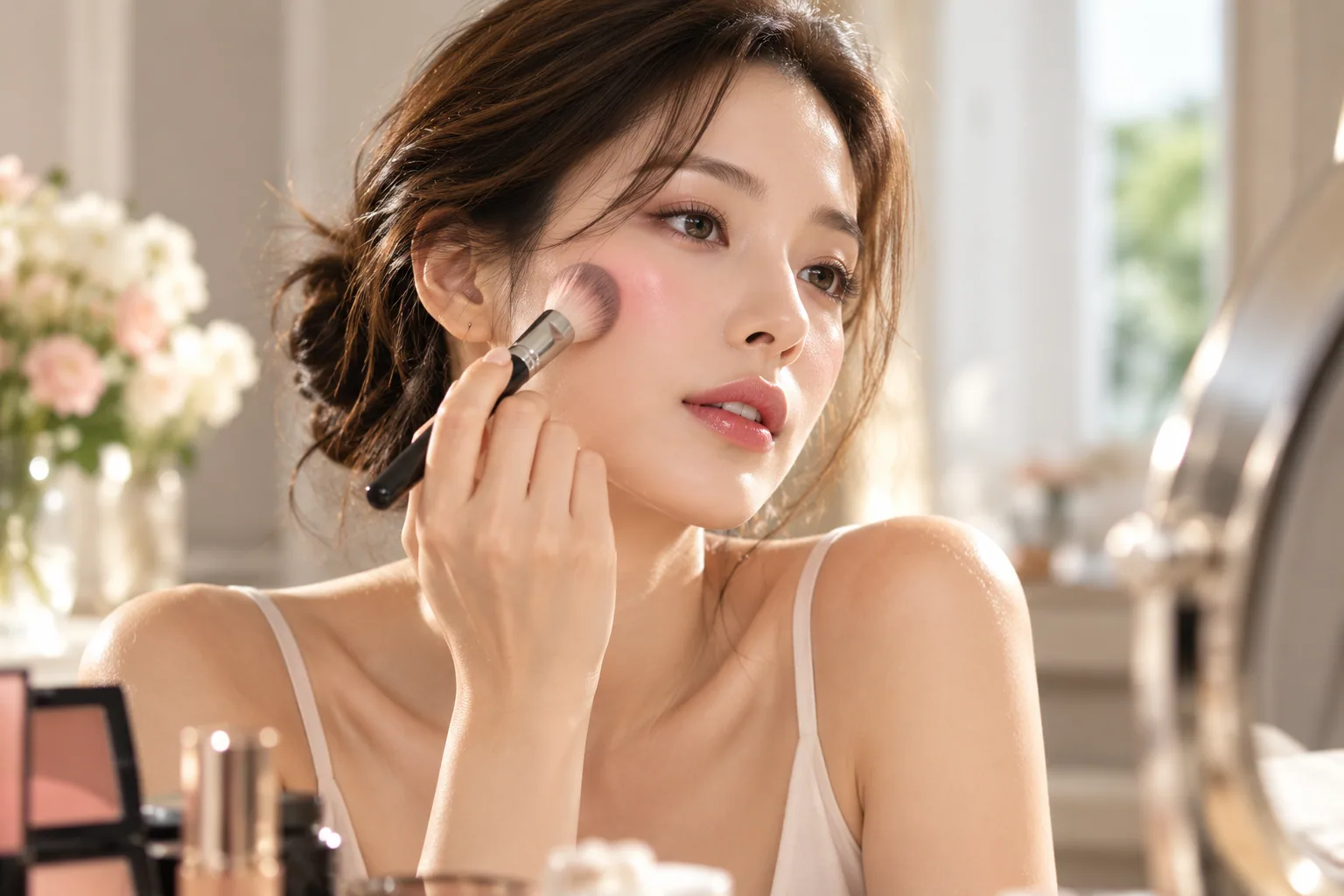
Look closely at the faces from this fashion week and one change stands out. Rather than covering the skin as if erasing it completely, more looks left some of the skin’s natural texture visible while precisely controlling the placement of the eyes, lips and radiance. Vogue’s roundup of the beauty trends from the final week of September likewise identified “skin-forward complexions” as a key direction. [1]

Why has foundation become sheerer?
A sheer base is less about wearing less makeup than about not applying the same amount across the entire face. Concealer corrects only areas that need it, such as redness or pigmentation, while the rest of the skin’s natural reflection and texture remain visible. That makes skin preparation more influential on the result than coverage.
How can you keep a sheer base from lifting in fall?
If your skin feels tight immediately after cleansing or flakes are visible, start by simplifying your moisturizing routine. The American Academy of Dermatology’s basic skin-care guidance likewise centers on gentle cleansing, moisturizing and sun protection. Rather than layering on multiple products, it is better to create a comfortable skin condition before applying a thin layer of base. [2]
In practice, instead of spreading foundation evenly over the entire face, start with a thin layer on the center and areas that need it. Increasing coverage across the whole face to conceal a single blemish can make the skin’s texture look thicker instead.
How can you tell radiance from shine?
Radiance looks natural when light reflects selectively from the high points of the face. But if the oilier T-zone is equally shiny, the skin can look heavy in photographs. Use different finishes by area: keep the cheeks and cheekbones moisturized-looking, while tidying the T-zone only as much as needed.
Can dry skin still wear matte foundation?
Yes, but flaking and tightness need to be addressed first. Rather than insisting on a matte formula, apply a small amount in a thin layer after moisturizing, and use minimal powder on dry areas for a more natural finish.
If I have large pores, is it better to cover them heavily?
Not necessarily. When a thick base collects around the edges of pores, it can emphasize texture instead. A practical approach is to use a small amount of primer or spot coverage and spread it thinly in the direction of the skin’s texture.
DERME VERDICT
Fall 2026’s skin-first look is not no-makeup; it is selective makeup. The key is to first stabilize the skin’s condition with moisturizing and sun protection, then correct only where needed rather than across the entire face. Instead of adding products to follow the trend, try reducing the areas that need base.
Sources
[1] Vogue · Beauty Marks: The Best Beauty Looks of the Week · 2026-09-26
[2] American Academy of Dermatology · Skin care basics · Accessed 2026-09-28