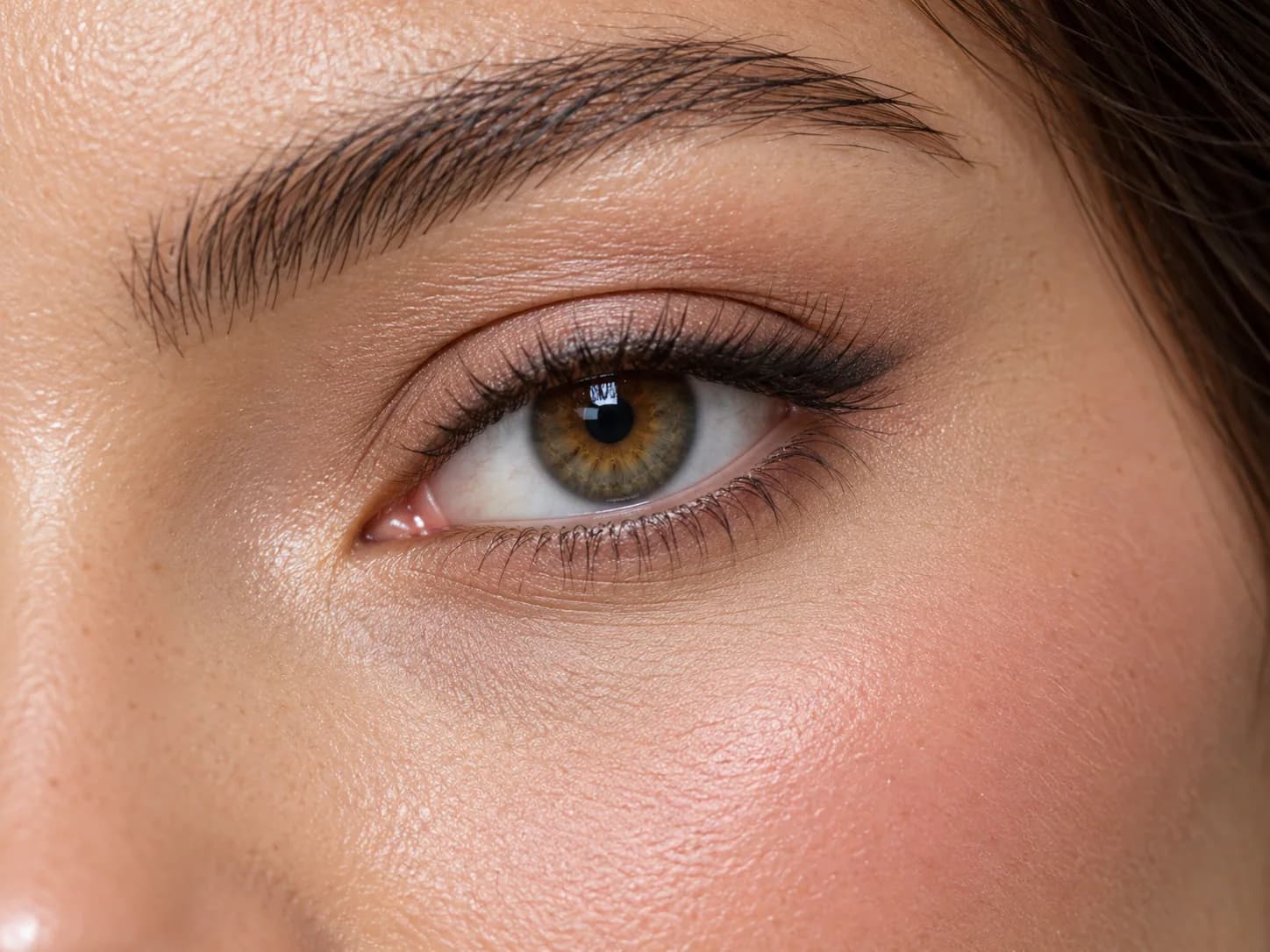
The answer lies not in the amount of shine, but in its placement. To make this look work in everyday life, lightly set areas where sebum tends to spread—such as the center of the forehead, the sides of the nose, and the chin—and leave a jelly-like sheen only where light catches, such as the cheekbones and brow bones.
At Dior’s Spring/Summer 2027 show, makeup artist Peter Philips explained that he created natural-looking skin, lightly powdered only the T-zone, and applied a glossy stick to the high points of the face. In other words, he separated matte and luminous finishes within a single face.[1] That distinction is what separates a ‘healthy glow’ from ‘afternoon shine.’
How is glassy skin different from dewy skin?
If dewy makeup involves spreading a moisturizing base thinly over the face, glassy skin is closer to editing the points of reflection. When hit by a camera flash, the upper cheeks should reflect light smoothly, while areas with more visible pores, such as the sides of the nose, should be sectioned off so they do not reflect excessively.
The new standard here is not whether the ‘glow looks pretty,’ but whether the ‘glow moves.’ The light on the cheekbones should shift as you turn your face. But if the sides of the nose and forehead appear broadly white from the front, it means there is too much product or it has been applied over too wide an area.
How can you keep the T-zone looking matte?
After applying skincare, do not put on foundation immediately; allow about five minutes for it to absorb. Then gently press a single sheet of tissue over the face to remove only the excess oil. Start with about one finger-joint’s worth of foundation rather than covering your entire palm.
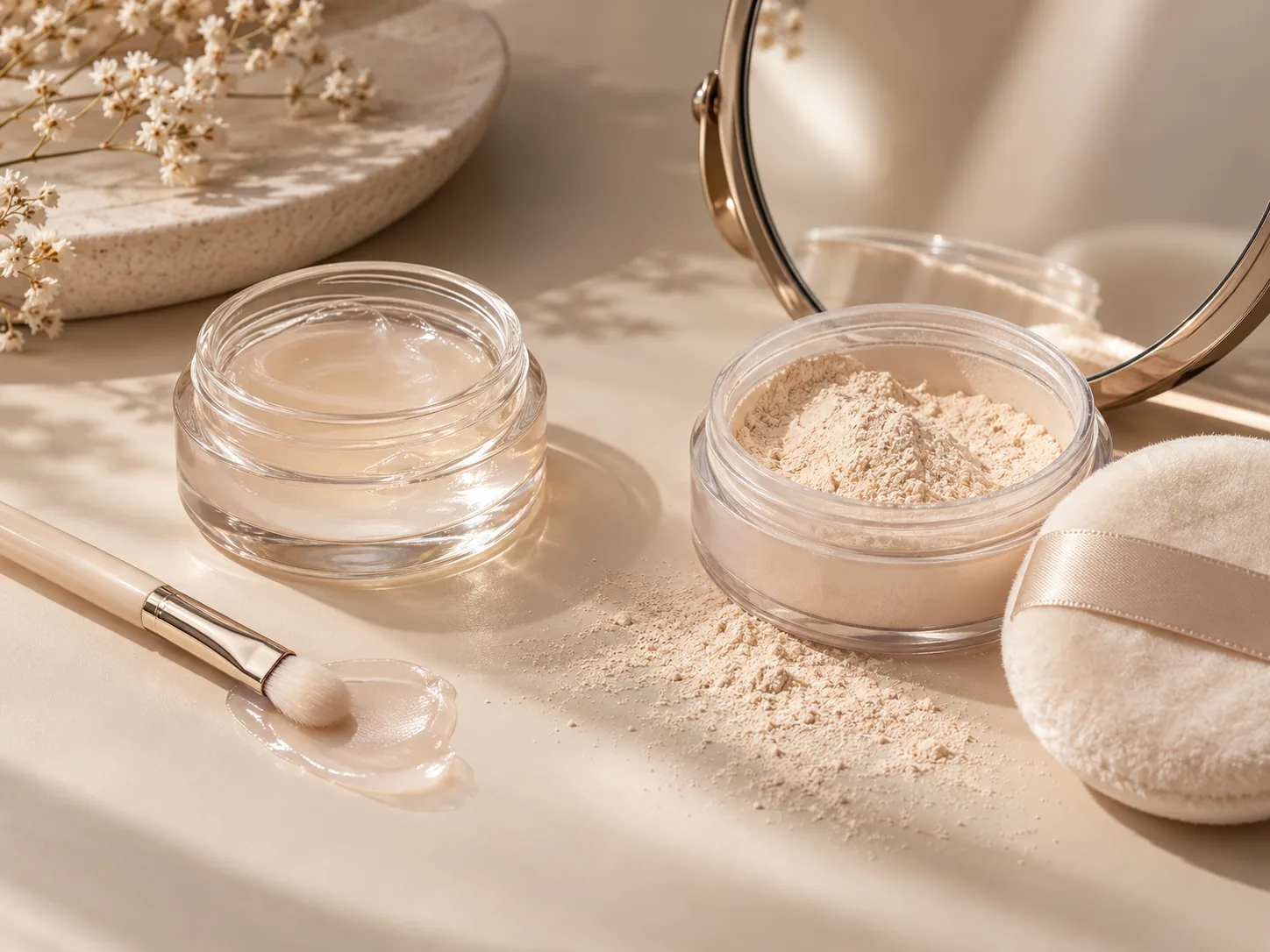
Instead of sweeping powder over the entire face with a large brush, use a small brush or puff to press it only onto the space between the brows, the sides of the nose, and the center of the chin. If you extend powder onto the cheeks, you will end up applying more luminous product again, making the base look heavy.
Where—and how much—should you apply shine?
Apply a thin layer about one finger-joint in length, starting at the highest point of the cheekbone and moving toward the temples. For the brow bones and cupid’s bow, the remaining product is enough when pressed on. Depending on your face shape and sebum levels, skipping the tip of the nose and chin can look more refined.
Take a small amount of cream highlighter onto the back of your hand, warm it with your body heat, and tap it on. Rubbing with a brush can disturb the foundation underneath. Compared with products containing large particles of shimmer, a transparent balm or a product with a fine pearlescent sheen is less likely to emphasize skin texture.
Can people with oily or acne-prone skin wear it too?
Yes, but it is better to use fewer products. The American Academy of Dermatology says that people with acne can wear makeup, but advises checking for “oil-free” and “non-comedogenic” labels and removing makeup before bed.[2] “Non-comedogenic” means designed to be less likely to clog pores; it is not a guarantee that no one will experience breakouts.
Applying a thick layer of sticky balm over active acne can make unevenness and redness more noticeable. On these areas, use a thin layer of concealer to even out the color, and place the shine on the surrounding cheekbones instead. There is no need to create a lit-from-within effect directly over inflamed areas.
What is the best order for touch-ups in the afternoon?
First, press blotting paper or tissue onto the skin to absorb excess oil. Then fill in areas where makeup has worn away with a very small amount of concealer, and finish by replenishing the T-zone powder. Applying powder directly over shine can cause sebum and powder to clump, making the skin texture look rougher.
Frequently asked questions
Can I create glassy skin with Vaseline?
It can work on small areas of dry skin, but applying it all over the face is not recommended. Its strong occlusive effect can feel heavy, and it can cause makeup to slip easily. A realistic approach is to test a small amount with a cotton swab on a single point of the cheekbone.
Won’t powder make all the glow disappear?
Not if you do not extend it over the luminous areas. Pressing powder only onto the T-zone and the sides of the nose preserves the sheen on the cheeks while giving definition to the center of the face.
DERME VERDICT
The key to glassy skin is not applying more, but editing the light. If you change just one thing today, stop powdering the entire face and treat the T-zone and cheekbones with different textures.