To put it simply, taking a few days off from makeup alone does not “detox” or regenerate the skin. However, for people whose makeup products or repeated cleansing cause irritation or clog their pores, reducing the number of products and returning to gentle cleansing may be enough to make the skin feel more comfortable. [1][2]
Pamela Anderson appeared at Paris Fashion Week in 2023 with little to no makeup. In an interview with Vogue, she described it as a choice to be honest with herself. She did not say she opposed makeup itself, but explained that on that day she wanted to step away from the lengthy makeup process. [1]
At Vogue World: Milano in September 2026, by contrast, she presented a full-glam look featuring bold eyeliner, smoky eyes, lashes, and glossy pink lips. It was also notable that she kept her complexion relatively light. [3]
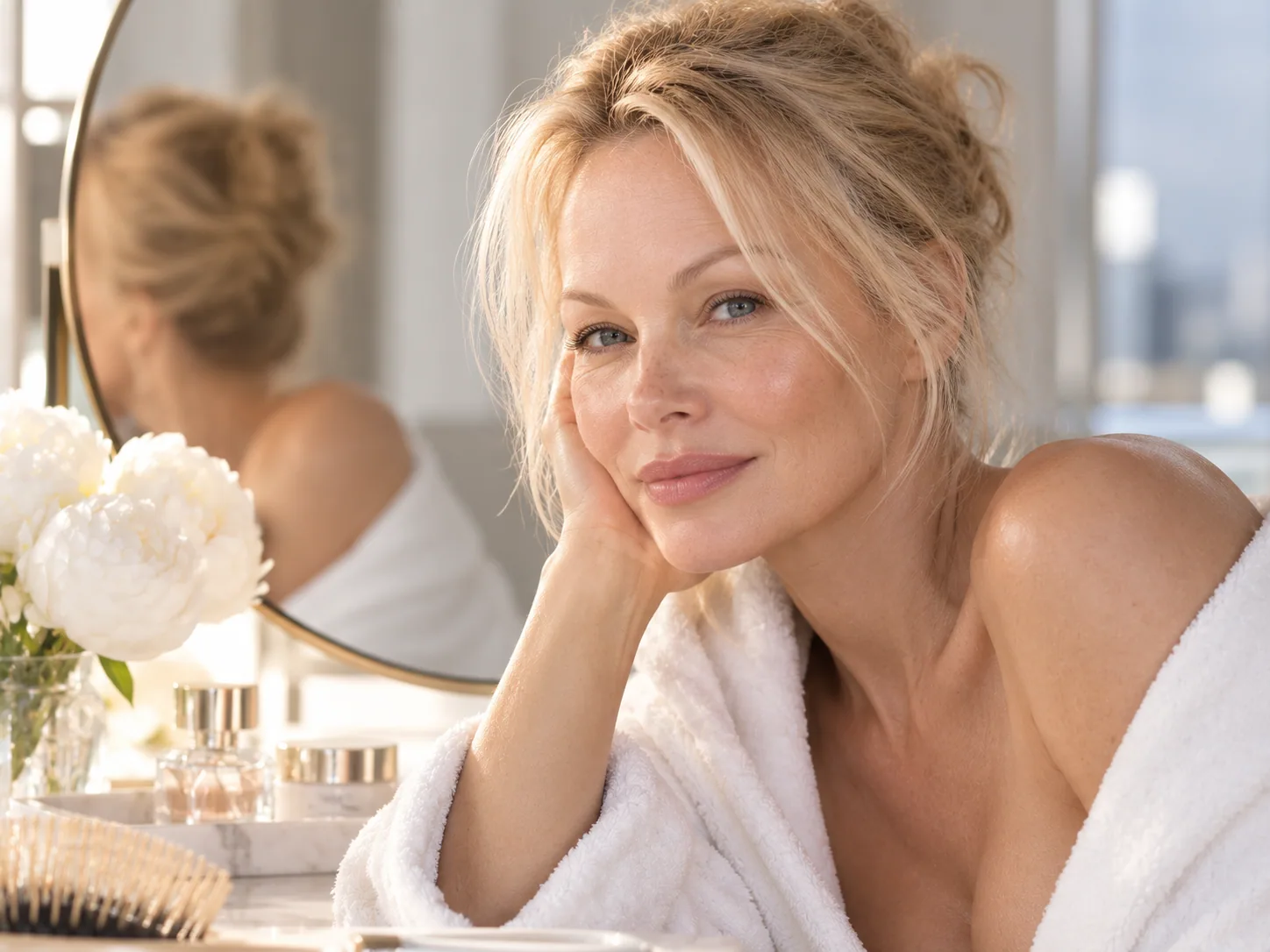
Does taking a break from makeup actually improve the skin?
The period spent without makeup is not itself a treatment. What matters is identifying which products may be causing the skin problem. The AAD says that people with acne can still wear makeup, but recommends choosing products labeled non-comedogenic or “won’t clog pores” and removing makeup completely before bed. [2]
What is more irritating to the skin: makeup or cleansing?
Either can be. Ingredients in a product may cause contact dermatitis, while rubbing vigorously to remove makeup can also irritate the skin barrier. The AAD recommends washing with a gentle cleanser after removing makeup and avoiding rubbing the face during cleansing. [2]
Why can skin texture and pores seem more noticeable without makeup?
Once makeup is removed, pores, pigmentation, residual acne, and flaking caused by dryness—all of which foundation may have concealed—can become more visible. Rather than concluding that the skin has “gotten worse,” it can help to identify the single biggest concern when determining the order of treatment.
What should you change first at home?
First, gently remove makeup and sunscreen in the evening. Second, reduce excessive cleansing that leaves the skin feeling tight, as well as frequent scrubbing. Third, if you are prone to acne, check that your base makeup, sunscreen, and hair products are labeled as non-comedogenic. Makeup brushes should be washed regularly and not shared with others. [2]
If you want to wear a thinner layer of makeup, what does a dermatologist look at first?
If pigmentation is the main concern, a laser or toning treatment suited to the type of pigmentation may be considered first. If pores and skin texture are the main issues, pore treatment may be considered according to the cause. If simple dryness and mild textural irregularities are the main concerns, moisturizing and barrier care may come before procedures.
As of September 2026, Seollem Clinic officially lists Silky Pore Injections, Shining and Royal Rejuran, and Super Miracle Glow Injections. The clinic menu is provided as information about currently offered services; it does not guarantee effectiveness for any particular patient or substitute for independent clinical evidence. [4][5][6]
FAQ. If your skin looks dull before an important event, should you start with glow injections?
Not necessarily. If the issue is simple dryness, moisturizing and irritation control should come first. If dryness and skin-texture concerns cannot be managed with home care and injection treatment is appropriate, HA- or PN/PDRN-based programs may be considered selectively. Because injectable procedures may involve a recovery period with bruising, swelling, or raised bumps, it is generally safer not to try one for the first time immediately before an event.
FAQ. If my pores are large, is Silky Pore Injections all I need?
No. Pores can be affected by different factors, including sebum, elasticity, scarring, and skin texture. Silky Pore Injections are one of the options offered by Seollem Clinic, not a treatment that is applied in the same way to every type of pore concern. [4]
Dr. Kang Jeong-ha’s recommendations
First, in daily life, prioritize three things: ① cleanse gently in the evening; ② avoid excessive scrubbing and using multiple active ingredients all at once; and ③ if you are prone to acne, choose non-comedogenic foundation and sunscreen. Reducing irritation is more important than simply designating days when you do not wear makeup. [2]
Second, begin treatment by choosing the single biggest concern. If excess sebum and visibly enlarged pores are the main issues, consider pore treatment first. If dryness and mild textural irregularities are central, PN/PDRN-based Rejuran or HA-based glow injections may be options. If pigmentation is the main concern, diagnosing the pigmentation and choosing a laser should come before injections. [4][5][6]
Third, there is no need to undergo every procedure at once in pursuit of “no-makeup skin.” As Pamela Anderson’s transformation shows, whether to wear makeup is a matter of style, while dermatological treatment addresses specific problems that remain even after makeup is removed. If you have a skin condition, treating it should take priority over cosmetic procedures.
Sources
[1] Vogue · Pamela Anderson Is Finally Feeling Like Herself Again · 2023-10-30
[2] American Academy of Dermatology · I have acne! Is it okay to wear makeup? · Accessed 2026-09-27
[3] Vogue · Pamela Anderson Goes Full Glam at Vogue World 2026: Milano · 2026-09-22
[4] Seollem Clinic · Silky Pore Injections · Accessed 2026-09-27
[5] Seollem Clinic · Shining · Royal Rejuran · Accessed 2026-09-27
[6] Seollem Clinic · Super Miracle Glow Injections · Accessed 2026-09-27

Interesting Dermatology Stories for Healthy Skin
Drawing on 16 years of experience running Seollem Clinic in Gangnam, we share accessible, friendly stories about dermatology, using topics ranging from practical skincare methods for everyday life to celebrities, public figures, and television. Through professional knowledge and experience, we aim to help your skin look healthier and more radiant. We hope this series broadens your understanding of skin and helps you discover ways to care for yourself.
Dr. Kang Jeong-ha, Medical Director (Seollem Clinic Gangnam)
- Source
- [1] Vogue·Pamela Anderson Is Finally Feeling Like Herself Again·2023-10-30
- [2] American Academy of Dermatology·I have acne! Is it okay to wear makeup?·확인 2026-09-27
- [3] Vogue·Pamela Anderson Goes Full Glam at Vogue World 2026: Milano·2026-09-22
- [4] 설레임의원·실키모공주사·확인 2026-09-27
- [5] 설레임의원·샤이닝·로얄 리쥬란·확인 2026-09-27
- [6] 설레임의원·슈퍼미라클 물광주사·확인 2026-09-27