Using a smaller amount may preserve more facial expression. But there is no rule that ‘low-dose’ automatically means safer and more natural. Natural-looking results depend less on the number of units used than on which product is placed at which points in which muscles, and on how well the balance is preserved between the muscles that raise the forehead and those that pull the eyebrows down.[1][2]
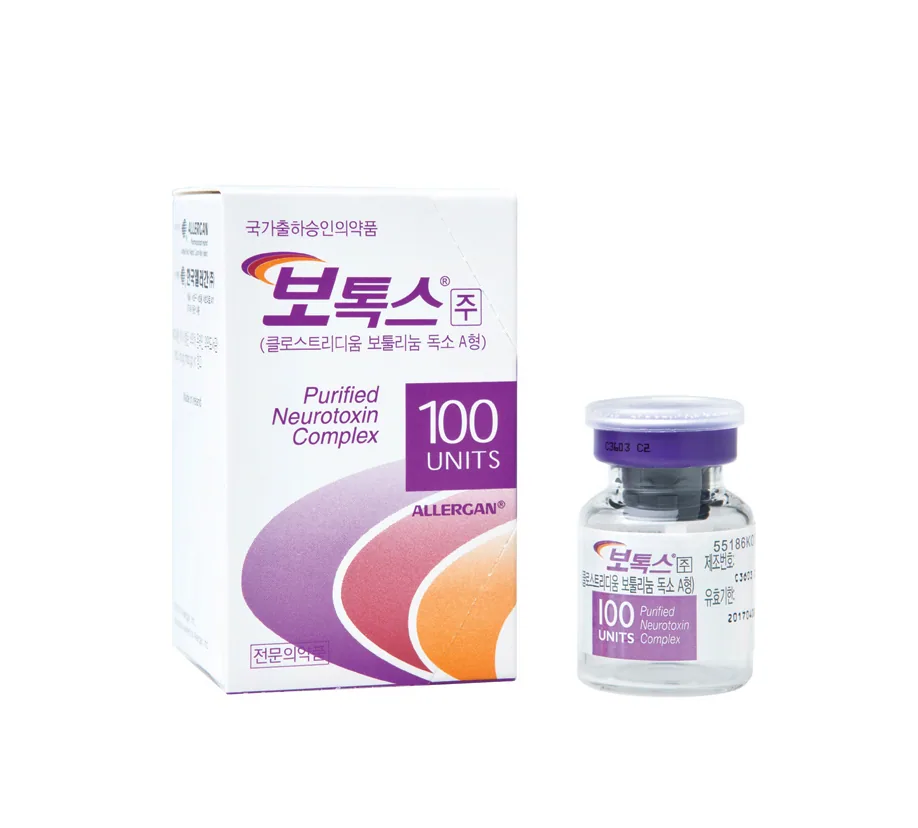
Botulinum toxin is a prescription medicine that temporarily reduces signaling between nerves and muscles, weakening the movement of the muscles used for facial expression. ‘Botox,’ as consumers commonly call it, is a specific brand name, but several botulinum toxin products are used in clinical practice. FDA prescribing information states that the potency units of one product cannot be directly compared with or converted to those of another.[1]
How does low-dose Botox differ from a standard dose?
Low-dose is not the formal name of a procedure with one standardized number. Even when marketed as ‘baby Botox’ or ‘micro Botox,’ the actual total amount, dilution, injection depth, and number of injection points may differ. Rather than comparing names alone, check the product name, total units, treatment area, and injection layer together.
For example, the U.S. BOTOX Cosmetic prescribing information lists a recommended total dose of 20 units for the glabella, 24 units for both lateral canthal lines, and 40 units for the forehead when treated together with the glabella. These figures are tied to the clinical trials and approval of that product; they are not a conversion chart that can be applied directly to products from other companies.[1] Products used in Korea must be checked against their separate Korean labeling.
If the amount is reduced, will side effects decrease by the same proportion?
That cannot be stated definitively. Drooping of the eyelids or eyebrows is related not only to the total amount but also to injection location, spread, and anatomical differences. In FDA approval trials, common adverse reactions to BOTOX Cosmetic included eyelid ptosis at 3% by treatment area, headache at 9% after forehead treatment, and eyebrow ptosis at 2%.[1] These figures are results for that product and method of use and do not apply at the same rate to every product or every practitioner.
Although rare, symptoms such as difficulty swallowing or breathing, suggesting that the toxin’s effects have spread beyond the injection site, require emergency evaluation. The FDA has warned that unapproved or products of unknown origin containing botulinum toxin may be linked to botulism-like symptoms, and explains that even approved products are medicines requiring a prescription and professional administration.[3] More important than the claim that it is a ‘small amount’ are the legitimate product, distribution channel, and practitioner’s license and training.
Will a smaller amount make the effects wear off sooner?
That is possible. A 2025 dose–response review concluded that doses lower than the approved dose were associated with shorter duration, lower response rates, and lower satisfaction, while no evidence was found that they reduced the risk of adverse effects.[2] However, most of the paper’s authors had relationships with manufacturers, and the limitation that studies involving different products and treatment areas are difficult to compare directly must also be considered.
Conversely, this does not mean that more is always better. A meta-analysis of clinical studies of the upper face confirmed wrinkle-reduction effects, but found substantial differences among studies and low consistency in satisfaction data.[4] The conclusion readers need is not ‘less or more,’ but first deciding whether the goal is to preserve movement, reduce wrinkles, or extend duration.
What should you ask during a consultation to make the choice easier?
First, ask for the exact product name and planned units for each treatment area. Second, ask how differences in your usual eyebrow height, eyelid drooping, and habit of opening your eyes with your forehead were assessed. Third, clarify what ‘natural-looking’ means: preserving a certain percentage of movement, or reducing wrinkles by a certain amount. The same number of units may be placed differently depending on the goal.
Is it okay to have the treatment right before an event?
It is better not to schedule an important event immediately after a first treatment. Injection marks or bruising may fade relatively quickly, but time is needed for the effects to settle and for left–right balance to be assessed. Check the Korean labeling for the product used and the medical institution’s guidance for the precise onset and reassessment timing.
If the effect seems weak, can I have more added right away?
Do not decide on additional treatment based on your appearance that same day. The time of onset and the point of maximum effect differ by product, and adding more too early can make it difficult to judge overcorrection. Wait until the reassessment date set before treatment, and compare photos of your expressions taken under the same lighting.
DERME VERDICT | Compare the plan, not the units
When choosing low-dose Botox, instead of relying on the one-line claim that ‘less is safer,’ ask for the product name, units by treatment area, target movement, and reassessment date to be written on one sheet. If difficulty swallowing, breathing, or speaking, or generalized muscle weakness develops after treatment, do not wait—seek medical attention immediately.[1][3] Natural-looking results come not from using the smallest amount, but from accurately weakening only the muscles that need it.
- Source
- [1] U.S. FDA · BOTOX Cosmetic Prescribing Information · Revised 2024-10
- [2] Journal of Cosmetic Dermatology · Why Dosing Matters: Dose-Response With OnabotulinumtoxinA · 2025
- [3] U.S. FDA · FDA Warns Companies Over Illegal Marketing of Botox and Related Products · 2025-11-05
- [4] Journal of Cosmetic Dermatology · Cosmetic Botulinum Toxin A Injections to the Upper Face: Systematic Review and Meta-Analysis · 2026