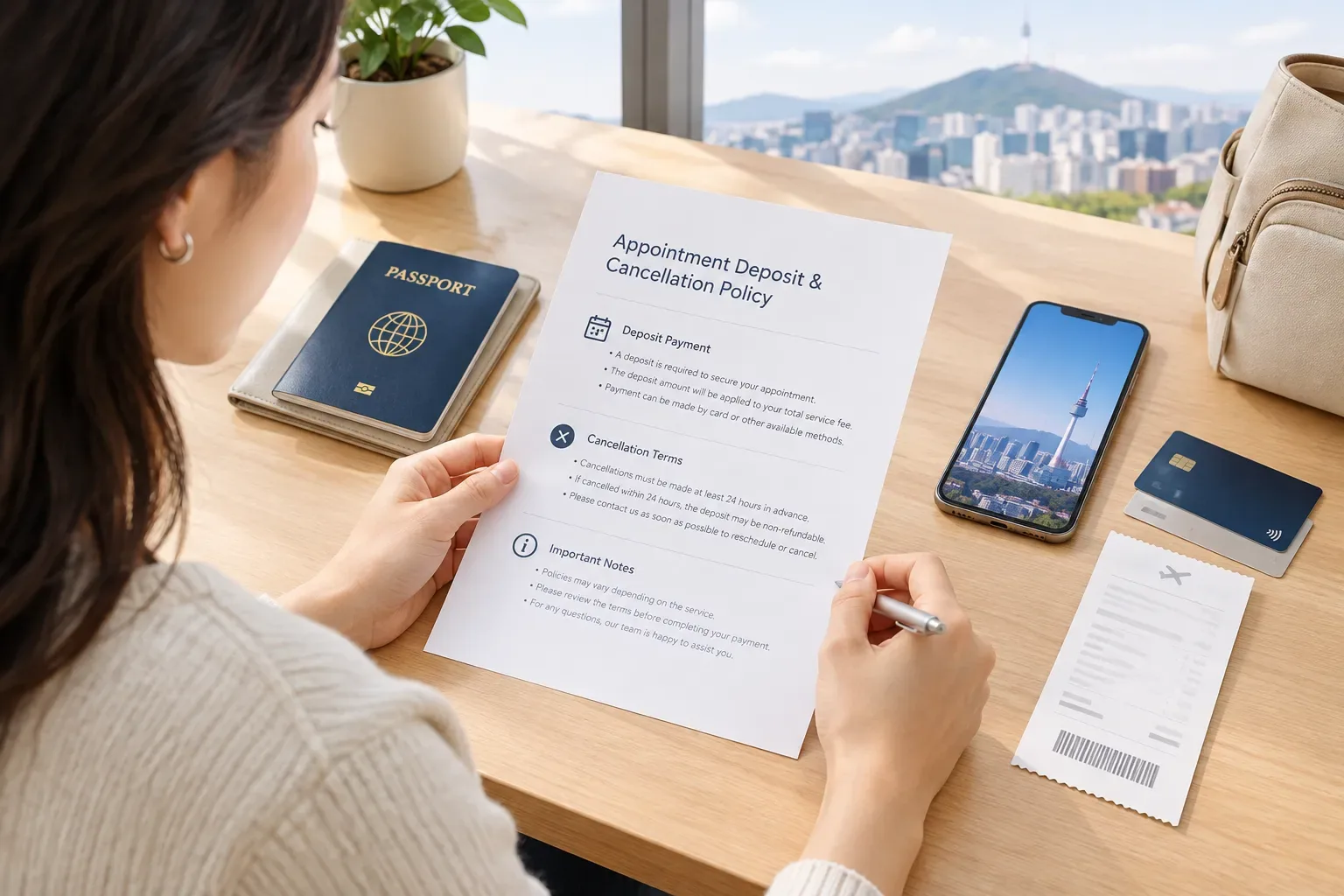
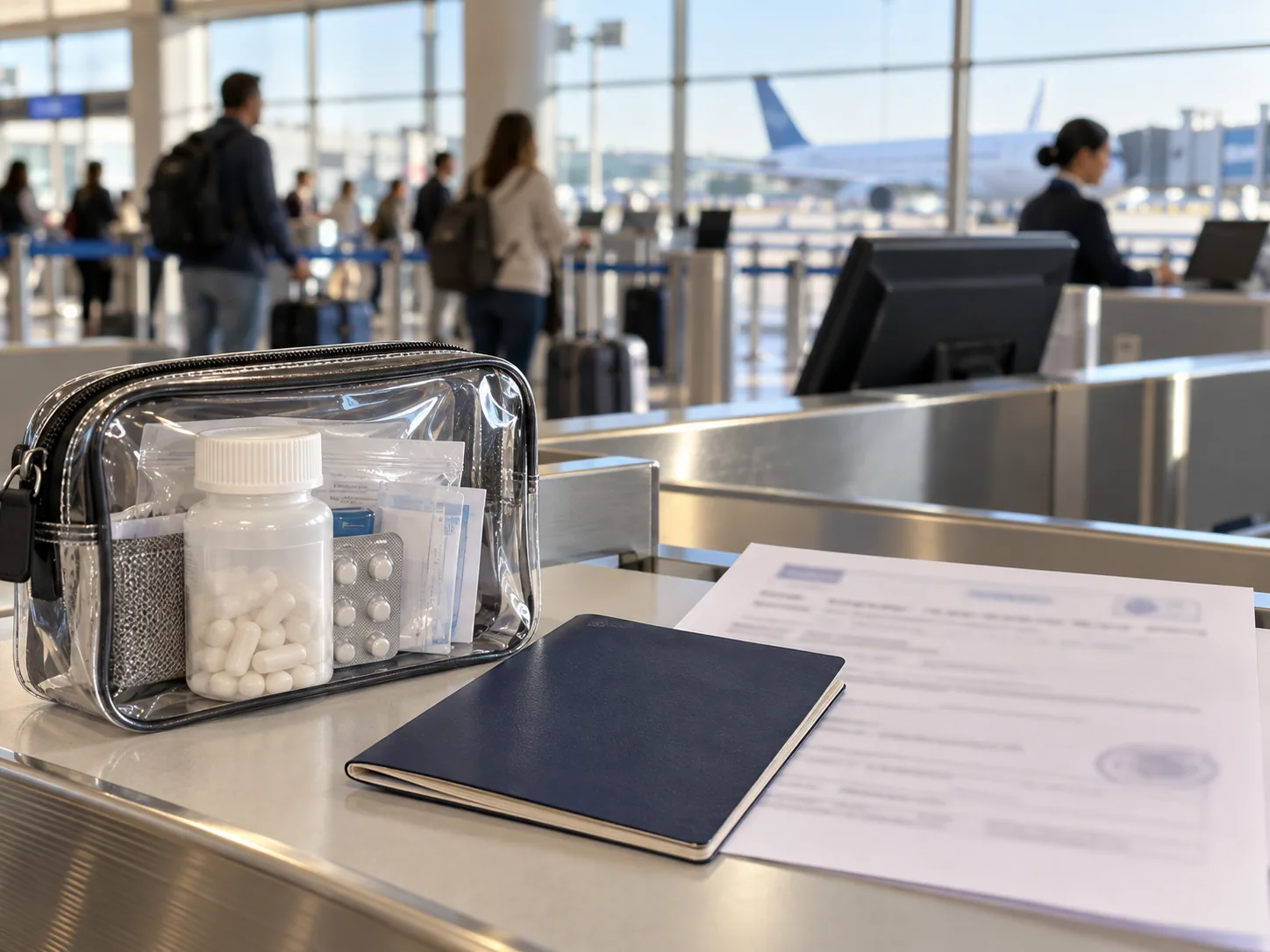
Returning home after receiving medical care in Korea does not automatically allow a coordinator to collect a prescription on your behalf. The general rule is that a doctor examines the patient in person and gives the prescription to the patient. Proxy collection is possible only under narrow exceptions—such as when the patient is unconscious, or has significantly limited mobility and has been receiving the same prescription for the same condition over an extended period—and only when the physician determines that the medication is safe.[1][2]
This distinction matters to medical tourists undergoing cosmetic procedures. The fact that you boarded a flight, have a busy schedule, or have run out of medication does not by itself create a statutory basis. If a problem arises after departure, it is more practical to obtain written information before leaving about which symptoms require local medical care and how long the current prescription is intended to last, rather than simply asking someone in Korea to send medication.

When Is Proxy Prescription Collection Permitted in Korea?
Article 17-2 of the Medical Service Act, in force September 11, 2026, establishes in-person examination and collection by the patient as the general rule. Exceptions apply when the patient is unconscious, or has significantly limited mobility and has received the same prescription for the same condition over an extended period. The attending physician must also determine that the medication is safe for the patient.[2]
The Korea Health Industry Development Institute’s practical FAQ for foreign patients explains that a patient living overseas after having already used a medical institution in Korea may be eligible for proxy collection if these requirements are met. It also states that, when family members are unavailable and the person knows the patient’s condition well and has usually accompanied the patient to appointments, an international-care coordinator or nurse at the attracting medical institution may serve as the proxy collector.[1] This is not a blanket authorization applying to all foreign patients, but a practical interpretation premised on meeting the individual requirements.
What Documents Are Needed for a Coordinator to Collect the Prescription?
The Enforcement Regulations of the Medical Service Act require the form in Appendix Form No. 8-2, “Application for Proxy Collection of Prescription.” The proxy collector must also present identification, the patient’s identification or a copy, and documents proving the relationship between the patient and the proxy collector.[3] For foreign patients, a copy of a passport may serve as identification, and institutional staff may need a certificate of employment, according to the Korea Health Industry Development Institute.[1]
Preparing the documents does not guarantee that the prescription will be issued. The physician reassesses the patient’s condition and the medication’s safety. If the symptoms have changed or new side effects have appeared, the premise of “the same prescription for the same condition” may no longer apply. In that situation, an in-person assessment by a local medical professional may be faster and safer.
Can a Video Consultation Result in a New Korean Prescription?
Under the system for pre- and post-treatment care for foreign patients, consultation and education conducted using ICT, or information and communications technology, are tracked separately.[4] However, the fact that a consultation took place does not mean that a new prescription can automatically be issued to a patient overseas. Consultation, medical examination, prescribing, and overseas delivery of medication each involve different legal and clinical conditions.
When making an appointment, therefore, do not ask only, “English consultation available?” Confirm the scope by asking, “After I return home, what follow-up can you provide, and does it include medical advice only or prescription support?” Keep the response in an email or booking message, and save the local emergency contact information along with the times when the Korean hospital can be reached.
What Should Go in an Aftercare Folder Before Departure?
First, obtain the exact names of the diagnosis, treatment or procedure performed, and any products or equipment used. Second, record the generic names, dosages, duration of use, and discontinuation criteria for all medications. Third, ask for guidance distinguishing the normal range of recovery from warning signs requiring immediate medical attention. Fourth, keep an English-language medical summary, receipts, and the relevant department’s contact details in the same folder.
Ask for the scope of aftercare to be itemized separately in the price estimate. Overseas video consultations, translation, reissuance of documents, and international shipping may not be included in the medical fee. Rather than relying on the phrase “free aftercare,” confirm in writing the service channels, available hours, fees, and whether prescription support is possible. This can help reduce disputes.
If Antibiotics or Painkillers Run Out After a Cosmetic Procedure, Is Proxy Collection Possible?
Running out of medication is not enough by itself. The physician must determine whether the requirements of long-term use of the same prescription and significantly limited mobility are met, and whether it is safe to continue the same medication without new symptoms.[1][2] If you have a fever, redness that is spreading quickly, severe pain, vision changes, or difficulty breathing, prioritize emergency medical care locally rather than waiting for proxy prescription collection.
Can a Coordinator Collect the Prescription If I Send Only a Copy of My Passport?
No. The application form, identification for both parties, and documents proving their relationship are required, and the statutory clinical requirements must also be met.[3] Before departure, confirm with the medical institution handling your care which document formats are required and whether originals or copies will be accepted.
DERME VERDICT | Planning Before Departure Comes Before Prescriptions After Returning Home
When booking treatment in Seoul, ask not only, “Can you issue a new prescription after I return home?” Ask instead, “Which symptoms mean I should see a local hospital, and what can the Korean hospital support remotely?” Putting an English medical summary, medication generic names, warning signs, and contact hours in one folder before departure can help reduce gaps in aftercare. Proxy prescription collection is not a standard service for travel convenience, but a limited statutory exception.
- Source
- [1] Korea Health Industry Development Institute, Medical Korea · Permitted Scope of Proxy Prescription Collection for Foreign Patients · 2025-06-02
- [2] Korean Law Information Center · Medical Service Act, Article 17-2, Prescriptions · Effective 2026-09-11
- [3] Korean Law Information Center · Enforcement Regulations of the Medical Service Act, Article 11-2, Method of Proxy Prescription Collection · Effective 2026-06-12
- [4] Korea Health Industry Development Institute, Medical Korea · Report on the Status of ICT-Based Pre- and Post-Treatment Care for Foreign Patients · Verified 2026-11-09