Whether you can bring ADHD medication or prescription sleep medication into Korea is determined not by the product name, but by how its active ingredient is classified in Korea. If a medication for self-treatment falls under narcotics or psychotropic medicines, approval to bring it into the country from the Ministry of Food and Drug Safety is required before entry, regardless of nationality.[1]
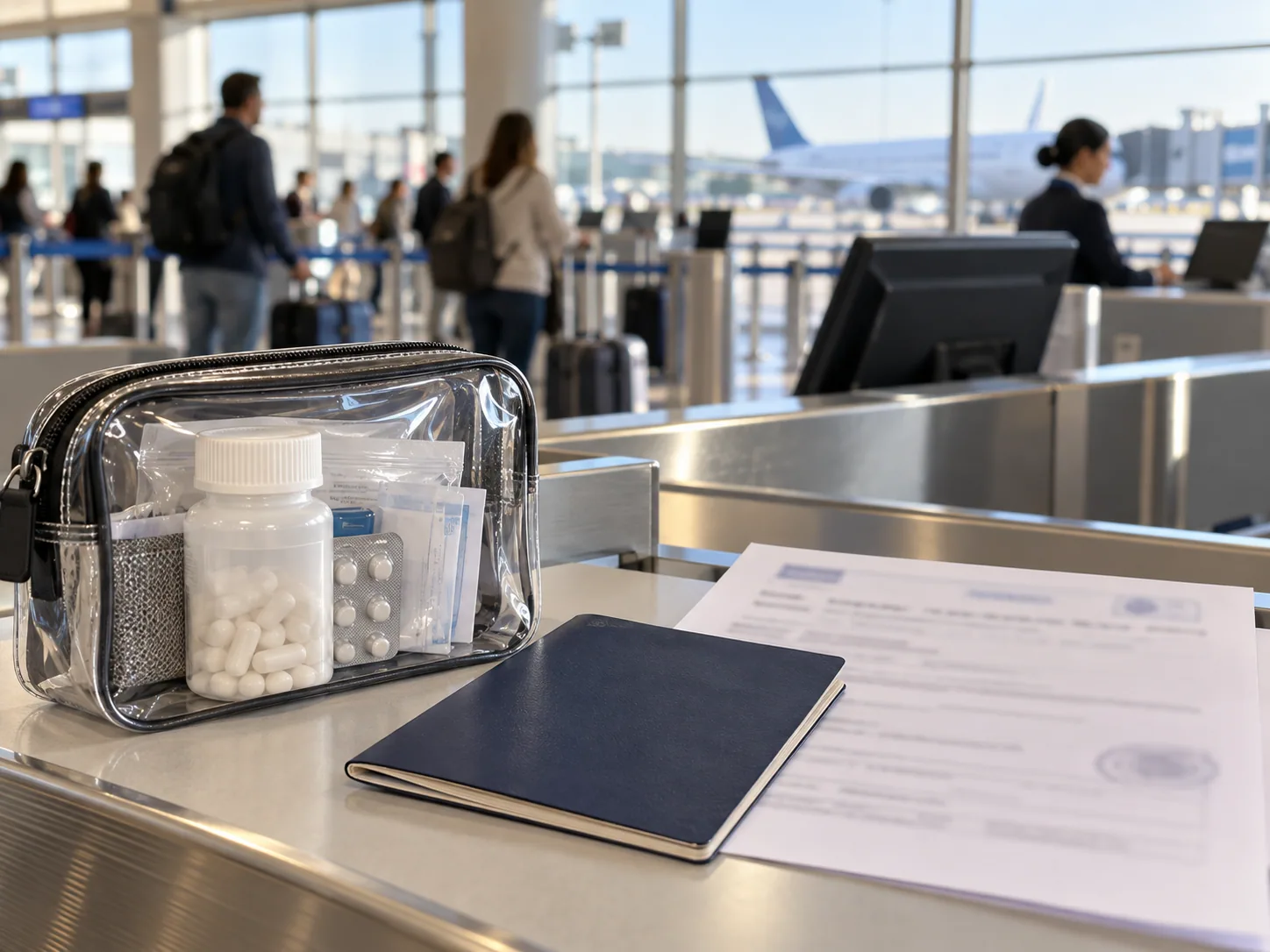
Simply placing the medication in its original container with the prescription in your luggage does not automatically authorize it. Applications for the relevant approval can be submitted online from December 27, 2024, but you must personally check the application documents and processing status before departure.[1] This is why confirming the medication’s generic name and active ingredient comes before booking a dermatology appointment in Seoul.
Which prescription medications require separate approval?
The treatment purpose alone—“ADHD medication,” “sleeping pills,” or “painkillers”—is not enough to determine this. Medications used for the same purpose may be ordinary prescription drugs, psychotropic medicines, or narcotics, depending on their ingredients. Do not search only by an overseas brand name. Note the generic name on the prescription label, the amount per tablet, and the daily dose, then check them against the Ministry of Food and Drug Safety’s criteria.
The Korea Customs Service identifies narcotics, psychotropic medicines, and medications of concern for misuse as goods subject to restrictions or declaration.[2] Even personal luggage within the tax-exemption limit must separately meet the requirements for restricted goods. Describing the medication as a “small amount for personal use” does not replace approval or declaration.
What sequence of checks can reduce mistakes before departure?
First, confirm the prescription medication’s English generic name and the amount of each active ingredient. Second, check the Ministry of Food and Drug Safety’s guidance on bringing narcotics into Korea for self-treatment, along with the latest attached instructions, to confirm whether approval is required and which documents must be submitted. Third, before the online application result is finalized, avoid tightly scheduling procedures for which changing the flight would be difficult.
Fourth, do not store the approval document and prescription information only on your phone; prepare printed copies as well. The original packaging and label, along with documentation from the prescribing healthcare professional, can help establish the medication’s identity, but they do not replace an official approval document when one is required for the ingredient. Fifth, check the Korea Customs Service guidance again to see whether an arrival declaration is required.
Why should you send medication information in advance when booking a Seoul hospital?
Pre-procedure medical questionnaires require not only the medication name, but also the ingredient, dose, and time of the last dose. Some medications require review for their effects on blood pressure, heart rate, drowsiness, bleeding risk, and interactions with other prescriptions. Stopping them on your own can cause rebound symptoms or a gap in treatment, so do not discontinue them without instructions from both your overseas prescriber and your Korean medical team.
Rather than explaining your diagnosis at length in a booking email, listing “generic name / strength / daily dose / purpose / prescribing country” in a table can reduce translation errors. Do not rely only on an indication that English consultation is available. Confirm whether the medical team will review your medication information before the visit and whether an interpreter on the day will accurately convey medication names as well.
If you run out of medication, can you immediately obtain the same product in Seoul?
There is no guarantee that the same brand, ingredient, or dosage is approved in Korea. An overseas prescription can also not necessarily be filled automatically at a Korean pharmacy. To prepare for loss or delays during travel, have your prescriber’s contact information, a list of ingredients, and your travel insurance policy available, and ask the hospital before traveling whether a local re-prescription may be possible.
Sending a medication subject to approval separately by international mail is not a solution. Different procedures may apply to carrying it in person and importing it by post. If you are uncertain, provide the Ministry of Food and Drug Safety’s Narcotics Policy Division and the Korea Customs Service with the ingredient name and intended quantity and ask them to confirm. Concealing the packaging or transferring the medication to another container can instead make explanation and tracking more difficult.
What should you have with you on the day you enter Korea?
Keep your passport, approval document, prescription information, and the container bearing its original label together in your carry-on luggage. Keep the quantity within the approved amount or the amount needed for the travel period, and do not mix in anyone else’s medication. In response to customs questions, provide the ingredient name along with the product name and whether approval has been obtained.
FAQ | Does melatonin require the same procedure?
It depends on the product form and ingredient classification, so do not decide based solely on how it is categorized for sale as a health functional food overseas. Check the latest Korean classification and requirements for personal importation at the ingredient level.
FAQ | If the prescription is in English, can I enter without approval?
No. An English prescription is documentation explaining the medication’s medical necessity and identity; it does not replace approval to bring narcotics or psychotropic medicines into Korea.
DERME VERDICT | Open the ingredient list before the booking calendar
The first step in medical travel to Korea is not booking a hospital, but checking the medication’s ingredients. After completing the four steps—confirming the generic name, obtaining Ministry of Food and Drug Safety approval, making any required customs declaration, and sharing the information with the hospital in advance—set your stay and procedure schedule. This can reduce the risk that your entire treatment plan will be disrupted at the airport.
Sources
[1] Ministry of Food and Drug Safety · Self Treatment Narcotics Bring in Permit · 2023-05-26
[2] Korea Customs Service · Customs clearance procedure for passenger belongings