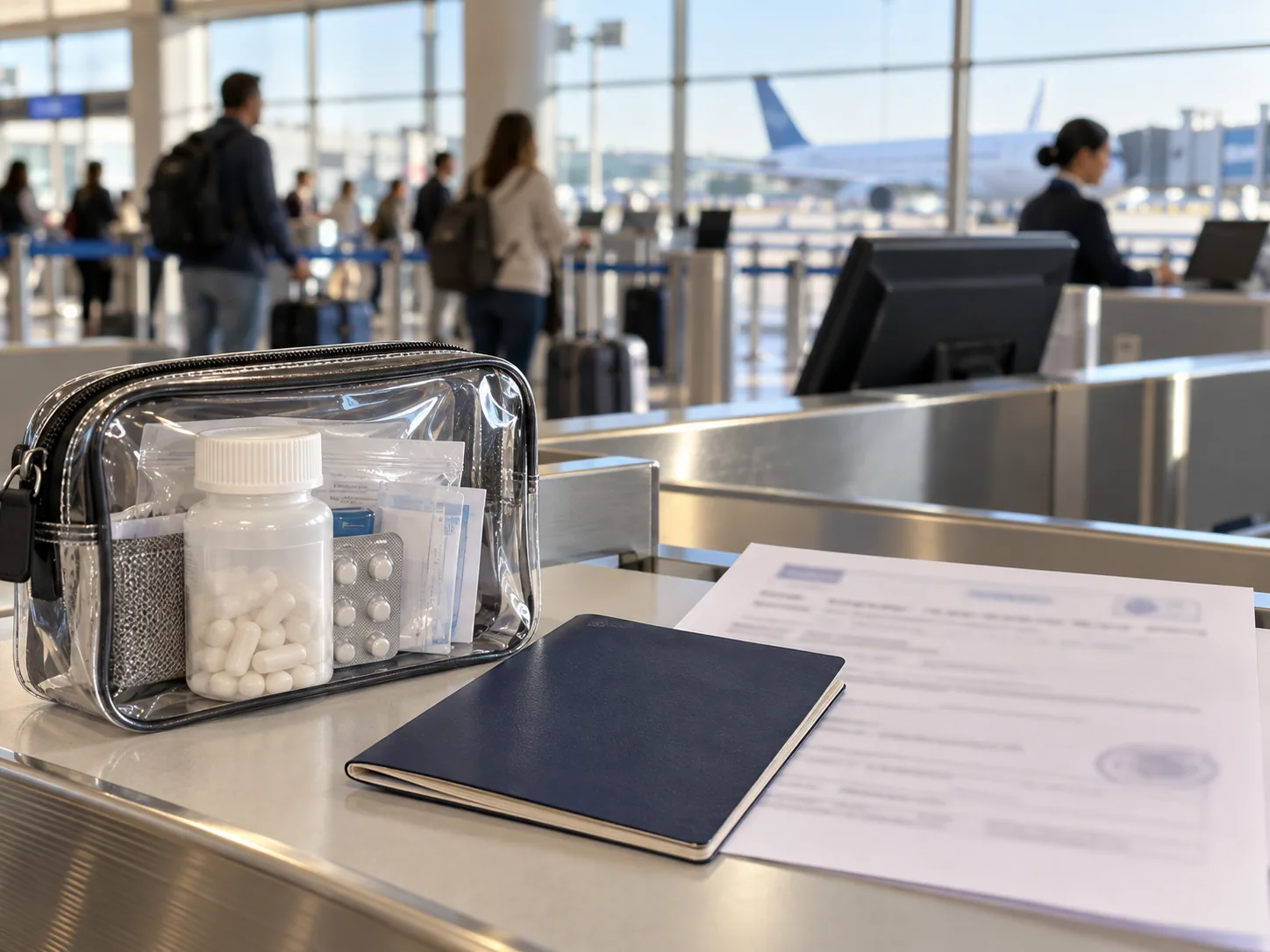
Returning to your hotel alone after receiving sedation or intravenous sedation is not a safe default. Sedatives can continue to affect judgment, balance, and memory after the procedure, so before booking, confirm the medical facility’s requirements for an accompanying adult, the means of transport home, and its observation plan for the first 24 hours. [1][2]
By contrast, topical anesthetic cream is a local anesthetic that reduces pain at the skin’s surface; it is not the same as sedation, which reduces consciousness. If you book your flight and hotel based only on a translated phrase such as “sedation included,” you may easily overlook the required escort arrangements. For international visitors, the most important first question is not the name of the procedure, but the medication actually used and the level of sedation.

How Do Topical Anesthetic Cream, Oral Sedation, and Intravenous Sedation Differ?
Topical anesthetic cream dulls sensation in the area where it is applied. Oral sedation uses medication taken by mouth to reduce anxiety and tension, while intravenous sedation delivers medication through a vein, allowing the depth of sedation to be adjusted more quickly. With deep sedation or general anesthesia, monitoring of breathing and circulation becomes more important. Even when procedures are all described as being performed “comfortably,” the restrictions on returning home can be entirely different.
When booking, ask about the exact medication name, route of administration, depth of sedation, responsible medical professional, monitoring method, and observation time in the recovery room rather than simply saying, “Please put me to sleep.” If you receive the answers in writing, in English or another language you understand, you can plan your airport and hotel arrangements more realistically.
Why Might Calling a Taxi Not Be Enough?
The Royal College of Anaesthetists advises against driving for 24 hours after sedation or general anesthesia and recommends that a responsible adult accompany the patient in a car or taxi. It also explains that public transportation should be avoided if possible. The key issue is not the mode of transport, but whether someone will be there to help if the patient becomes unsteady or cannot remember instructions. [1]
A taxi driver summoned on your own is not a medical escort. The driver will not listen to the discharge instructions with you, confirm that you have entered your hotel room safely, or assume responsibility for responding to sudden vomiting, bleeding, or breathing problems. Do not assume that the clinic will allow discharge without a caregiver; confirm its policy before booking.
Who Should Accompany You, and How Long Should They Stay?
Most guidance uses a responsible adult aged 18 or older as the baseline. A hospital may require an escort for the first 12 or 24 hours, depending on the depth of sedation and the invasiveness of the procedure. Guidance from Cambridge University Hospitals advises patients to rest with a responsible adult for 24 hours after the procedure and to avoid driving, cycling, alcohol, and operating machinery. [2]
If family or friends are not traveling to Korea with you, first ask whether the hospital recognizes a professional escort service or offers medical transportation support. Do not assume that a general travel guide or interpreter can also serve as a caregiver. Confirm the scope of responsibility, waiting time, escort home, whether the escort will stay at the hotel, and the costs in writing.
Six Questions to Send the Clinic Before Booking
① What exactly is the procedure and sedation method? ② What are the medication name and route of administration? ③ How long must I fast, and which medications need to be stopped? ④ Is an adult escort required only at discharge, or also at the hotel? ⑤ How many hours must I avoid driving, alcohol, work, and flying that day? ⑥ After I return home, whom should I contact about an adverse reaction, and in what language?
Request a separate estimate as well. In addition to the procedure fee, check whether there are charges for sedation, pre-procedure tests, the recovery room, prescription medications, an escort or vehicle, additional accommodation, or a later-than-planned discharge. The phrase “all-inclusive” does not replace a written estimate listing what is included.
Is a Nearby Hotel Enough?
Distance matters, but also consider the elevator, a 24-hour front desk, a telephone in the room, meals available for delivery, and emergency vehicle access. After sedation, avoid taking a hot shower alone, using cooking appliances, drinking alcohol, or handling important contracts. [2]
Problems may arise if the booking name differs from the escort’s or if an additional person cannot stay in the room. Confirm with the hotel in advance whether late arrival and the escort’s overnight stay are permitted, and determine whether the front desk should be given the clinic’s address and emergency contact details.
When Can You Fly?
There is no official rule that says flying is always possible after 24 hours. In addition to the effects of sedatives, swelling or bleeding at the treatment site, compression garments, the risk of blood clots, pain medication, and the possibility of additional medical care may affect your schedule. Tell the clinic your flight date and time, obtain individualized written guidance, and do not make same-day departure your default plan.
If recovery takes longer than expected, you may need to change your ticket and book additional accommodation. At the booking stage, ask about the minimum length of stay, whether a follow-up visit is required, and when you should receive clearance before flying. Choosing changeable flights and hotel bookings helps keep your medical schedule from being driven by your travel itinerary.
What Role Do Interpreters and English Consultations Play in Safety?
Interpretation is not merely a convenience; it is part of informed consent and safe discharge. You need to understand the medication name, fasting instructions, allergies, caregiver requirements, and warning signs accurately. The Medical Korea Support Center states that it provides foreign patients with information on registered medical institutions, connections to multilingual medical interpretation, and consultations regarding inconveniences and disputes. It is an official channel to check when the clinic’s own interpretation is not sufficient. [3]
The interpreter’s role in translating the procedure consent is separate from the role of a caregiver after discharge. Record separately in the booking documents whether one person will perform both roles, whether they can be contacted after their working hours, and how medical confidentiality and additional fees will be handled.
Frequently Asked Questions
Q. Do I need a caregiver if I only use topical anesthetic cream?
In general, it differs from sedation that reduces consciousness, but this depends on the procedure and the clinic’s policy. Confirm whether it is local anesthesia only or whether an oral sedative or strong pain medication will also be used, and follow the clinic’s discharge criteria.
Q. I’m traveling alone. What should I do if the clinic recommends a sedative on the day of the procedure?
If you have no escort plan, rather than agreeing on the spot, ask about nonsedation alternatives, postponing the procedure, or an escort service recognized by the clinic. Reflect in your schedule and budget that the procedure may be canceled for safety reasons if you do not meet the caregiver requirements.
Q. What records should I carry to the hotel and on my journey home?
Obtain, in your own language, the procedure name, medications and doses used, allergies, discharge time, medications to take, prohibited activities, expected recovery range, warning signs, and a 24-hour contact number. Also request English-language medical records and receipts matching the name on your passport.
DERME VERDICT | Sedation Is Not Just a Procedure Option; It Is Part of Your Travel Itinerary
If you book a procedure involving sedation in Seoul or Gangnam, group “escort, transportation, one hotel night, and emergency contact” together in your budget. Confirm the medication and depth of sedation in writing, and first ask whether your plan to call a taxi alone meets the clinic’s policy. A good medical-travel itinerary includes not only the time of the procedure, but also the time needed to recover safely.
- Source
- [1] Royal College of Anaesthetists · Caring for someone recovering from a general anaesthetic or sedation
- [2] Cambridge University Hospitals NHS Foundation Trust · Adult patients discharged following procedural sedation
- [3] Korea Health Industry Development Institute Medical Korea · Services provided by the Medical Korea Support Center (Seoul) · 2025-06-05
- [3] 한국보건산업진흥원 Medical Korea · 메디컬코리아지원센터(서울) 제공 서비스 · 2025-06-05