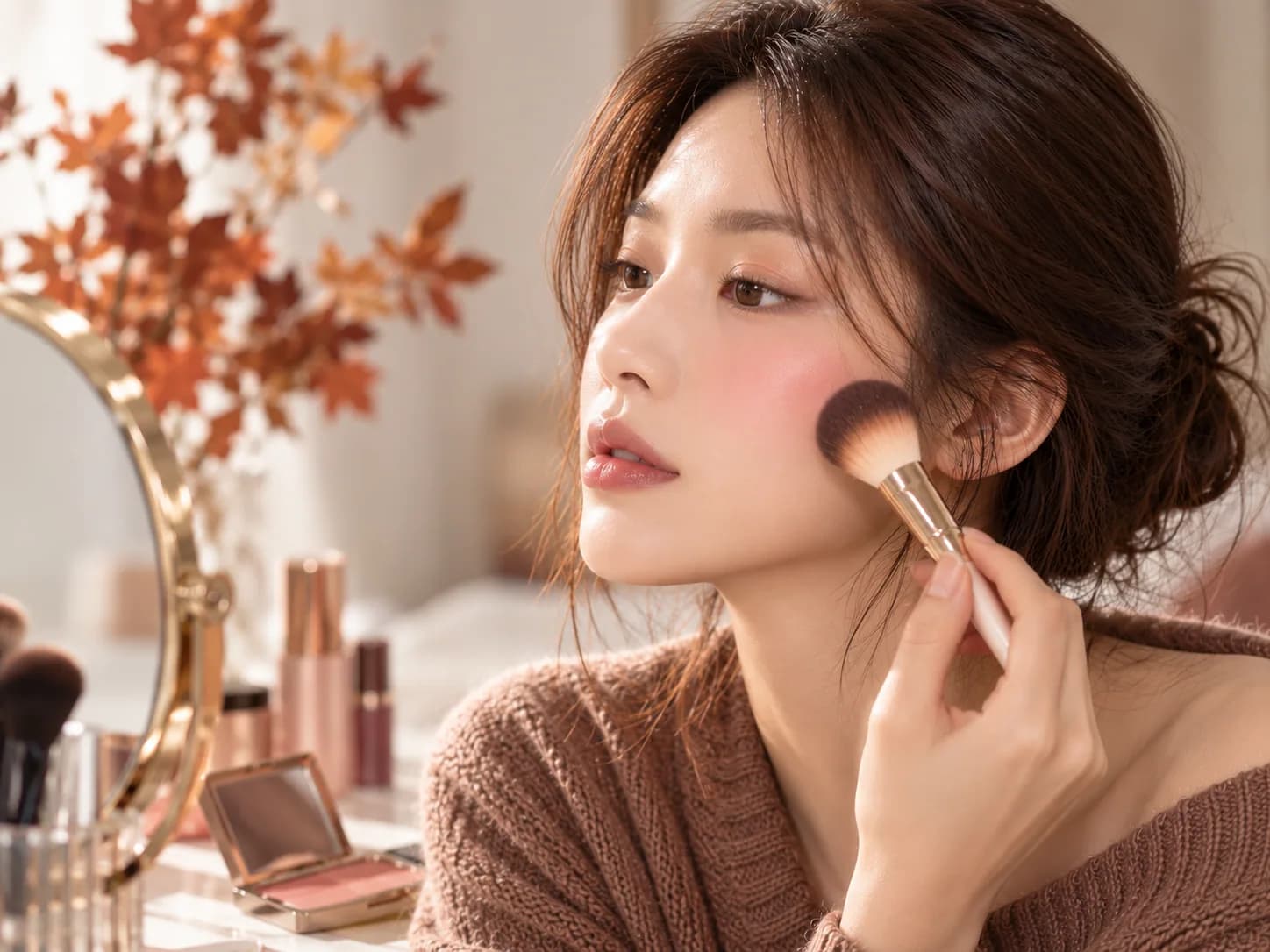
The key takeaway: Fall’s “sun-kissed” skin can be created without actually tanning the skin. Jennifer Lopez’s touch-up, featured by Vogue in September 2026, layered warm brown tones thinly over the eyes and cheeks while toning down only excessive shine at the center of the face, carrying summer’s bronzed impression into fall.[1]
What matters in bronze makeup is not making the skin look darker, but creating “warm shadows” along the outer areas and high points of the face. By contrast, lightly tidying areas prone to shine, such as beside the nose, around the mouth, and on the chin, keeps the overall look from feeling heavy. Actual tanning or UV exposure is a separate issue from the effect of makeup.
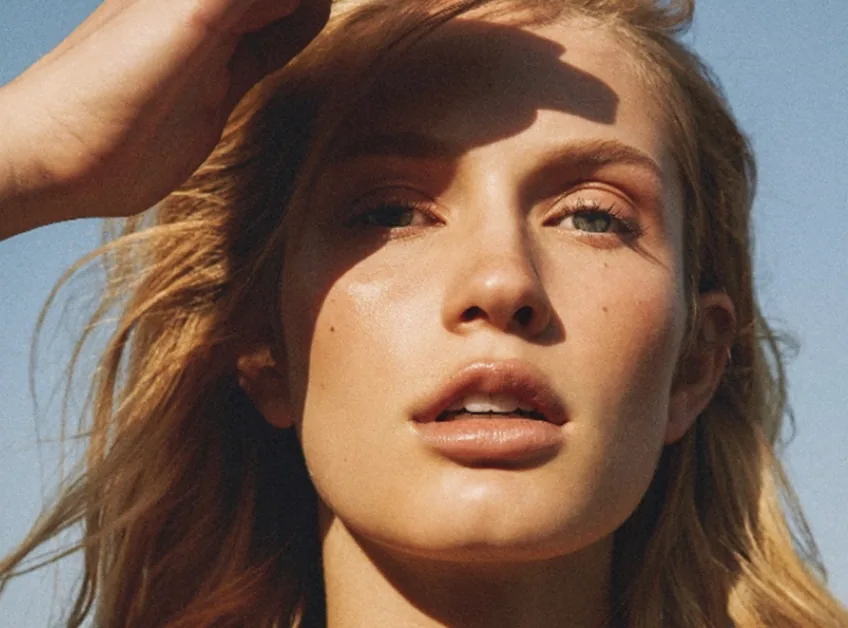
How is fall bronze makeup different from summer makeup?
In fall, it looks more natural to leave radiance and color selectively in place rather than making the entire face glow as in summer. In Vogue’s September 2026 article, Lopez used warm brown eye makeup, a chestnut-toned lip liner, and a warm brown diffused lightly over the cheeks, while toning down shine around the mouth and on the chin.[1] In other words, placement and intensity matter more than using “a lot of bronzer.”
Where should bronzer be applied for natural-looking definition?
Rather than applying it heavily from the start, place a small amount along areas that catch the sun first—such as the hairline in front of the ears, the temples, and the outer cheekbones—and soften the edges. Covering the center of the face at the same intensity can make the complexion look dull or create a disconnect between the base and the color of the neck. With cream or liquid formulas, it is easier to make adjustments by reducing the amount on the back of the hand before tapping it on, rather than applying a large amount at once.
How should you choose a shade for your skin tone?
On fair skin, beige and light brown shades are less likely to go wrong than strongly orange tones. Medium skin tones are often complemented by golden brown, while rich brown with a slight red undertone can define deeper skin tones. Rather than making absolute rules such as “this shade for warm undertones, that shade for cool undertones,” it is more practical to test a color one or two shades deeper than the actual skin tone of the neck and collarbone.
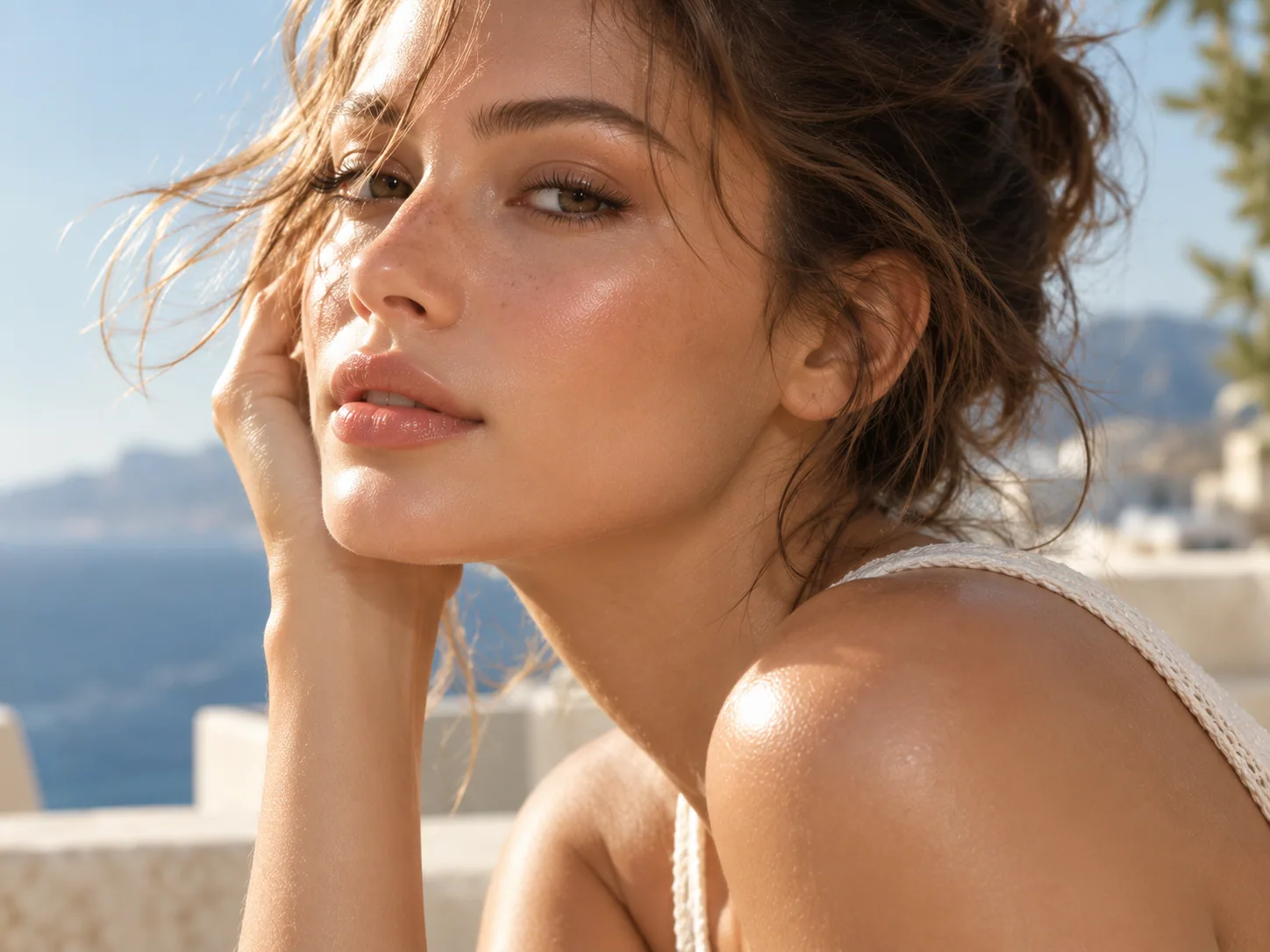
Can bronzer or self-tanning products replace sunscreen?
No. The U.S. FDA warns that tanning products without sunscreen ingredients do not protect against sunburn, and that repeated UV exposure without protection may increase the risk of skin aging and skin cancer even if no sunburn is felt.[2] A deeper color and UV protection are not the same thing.
Sunscreen should therefore be used separately even when wearing bronze makeup. If you are concerned about makeup lifting, apply enough sunscreen, give it time to set, and then layer the base and bronzer thinly.
What is a good order for a five-minute morning bronze makeup routine?
First, even out the complexion with sunscreen and a thin base. Second, place a small amount of bronzer along the hairline and outer cheekbones. Third, lightly connect a brown in the same color family over the lids or around the eyeliner. Fourth, define the lips with a chestnut or rose-brown shade and lightly fill in the center. Finally, press powder only onto areas prone to shine, such as the T-zone or around the mouth, leaving the skin’s dimension intact.
Frequently Asked Questions
Will using bronzer every day make the skin darker?
A standard color cosmetic bronzer adds color to the surface of the skin, so the skin returns to its original color when it is washed off. Actual tanning, UV exposure, and hyperpigmentation are separate issues, so there is no need to deliberately tan the skin to create a “bronze look.”
Does the skin need a lot of radiance to look sun-kissed?
No. Leaving a glow only where it is needed, such as on the upper cheekbones, while tidying the center of the face can actually make the definition more visible. For oily skin, the color and placement of the bronzer alone may be enough rather than adding more radiance products.
DERME VERDICT
The practical point of fall 2026 bronze makeup is not “tanning,” but “placement.” Apply warm brown thinly along the outer areas of the face and tidy only the shine at the center to create a seasonally appropriate sun-kissed look. Actually tanning the skin is not an essential step for achieving a makeup effect, and UV protection should be maintained separately.[2]