Many people find that their skin suddenly feels tight and their flakiness becomes more noticeable in autumn. It is easy to reach first for a new serum or cream, but the more basic place to start is by reducing daily habits that worsen dryness. The American Academy of Dermatology (AAD) recommends avoiding excessively hot, lengthy showers, using a gentle cleanser only where needed, and applying moisturizer while the skin is still damp after washing.[1]
Longer showers do not make skin more hydrated
The AAD advises limiting showers or baths to about 5–10 minutes using lukewarm water when the skin is dry. Hot water and long showers may feel comforting in the moment, but they can work against the skin’s surface lipids and its ability to retain moisture. Rather than rubbing vigorously with a towel afterward, gently pat the skin, leaving some moisture behind, and moisturize right away.[1]
Cleansing is about doing enough, not doing more
When dryness is severe, a rich lather can make the skin feel especially clean, but using more cleanser does not make skin healthier. Cut back on products with strong fragrances or those that leave the skin feeling tight, and prioritize gentle cleansing suited to the condition of both the face and body. Starting a new exfoliant or scrub at the same time can also make it difficult to tell which product caused irritation.
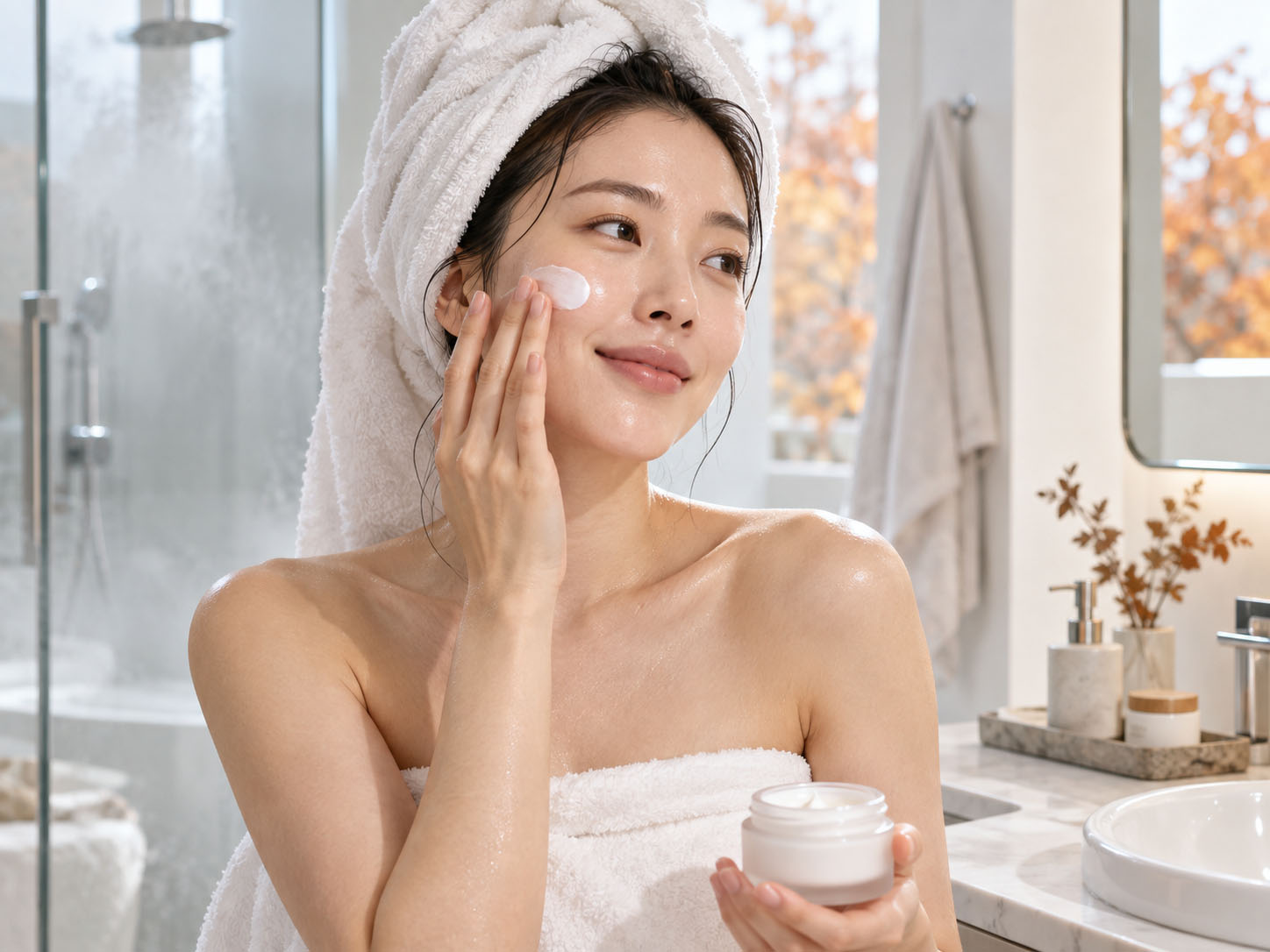
With moisturizer, start by correcting when you apply it—not which kind you use
The key is to apply moisturizer while the skin is still slightly damp. Richer formulas, such as creams or ointments, may be useful for dry skin. Applying more after washing your hands or whenever tightness develops during the day can also help.[1] Rather than layering multiple products, start by establishing the simplest routine that keeps your skin comfortable.
An autumn routine can be enough with three steps
First, wash briefly with lukewarm water. Second, use gentle cleansing and minimize friction. Third, moisturize immediately after washing and continue using broad-spectrum sunscreen with SPF 30 or higher during the day.[1] If cracking, pain, severe itching, or recurring redness persists even after maintaining these basics for 1–2 weeks, dermatological care is needed to determine whether there is another cause, such as dermatitis, rather than simple dryness.
DERME VERDICT
During seasonal transitions, skin often changes first not by adding new products, but by reducing the irritation repeated every day. Before changing your moisturizer, check your shower length, water temperature, cleansing intensity, and moisturizing timing. Once your skin feels more comfortable, adding any necessary functional products one at a time makes it easier to distinguish cause from effect.