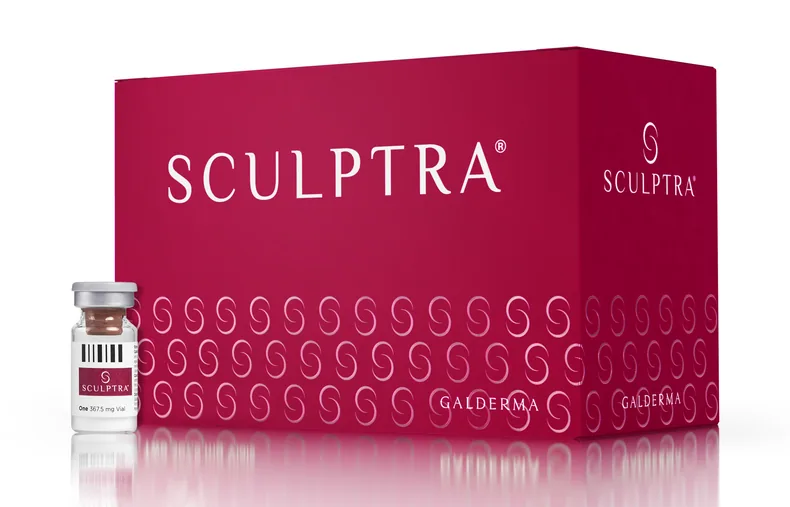
Not every lump you can feel after a Sculptra treatment is the same problem. Swelling and injection marks on the day of treatment, non-inflammatory nodules that appear weeks later, and red, painful inflammatory nodules have different causes and require different responses. Rather than trying to distinguish them by touch alone, note when it appeared, whether it hurts, whether it is red or warm, and whether it is growing.
Sculptra’s main ingredient, PLLA (poly-L-lactic acid), is a microparticle injectable that induces collagen formation through a tissue response rather than a gel that immediately adds volume. U.S. FDA approval materials specify the indications and use by trained injectors, and report that papules and nodules were observed in clinical and post-market data.[1] However, the incidence reported on the label was obtained under specific dilution methods, treatment sites, definitions, and follow-up periods. It should not be read as an individual risk for other products or every clinic.
When do Sculptra nodules appear, and how do they differ?
Bumpy areas appearing immediately after treatment or within a few days may be caused by the injected material, swelling, or needle marks. PLLA-related papules and nodules, by contrast, can appear weeks to months later. In one comparative study cited in the FDA label, the median time to nodule onset was 160 days in the Sculptra group; another post-market study separately counted nodules and papules across multiple facial sites.[1] More important than the numbers is the timeline: they can also develop late.
A 2026 scoping review of 40 studies classified PLLA nodules as non-inflammatory, inflammatory or immune-mediated, suspected infection or biofilm-related, and other forms.[2] Biofilm refers to a state in which microorganisms adhere to a surface and form a protective layer. The review concluded that dilution, reconstitution, injection depth, and technique may be associated with their occurrence, but many of the included studies were case reports or expert consensus, and a majority of the authors disclosed relationships involving manufacturer lectures or consulting. The treatment algorithm is therefore a useful map, not an established single standard.
Which lumps can be watched, and which signs should be checked immediately?
A small, skin-colored nodule that is not painful and is shrinking may be monitored by a clinician with photographs and palpation. In contrast, redness, warmth, throbbing pain, discharge, sudden swelling, rapid enlargement, or fever should not be treated as a ‘simple lump’ and vigorously massaged. If infection is possible, administering a steroid injection first may also be risky, so the cause should be established beforehand.[2]
If facial asymmetry is worsening or there is pain around the eyes or a change in vision, immediate assessment is needed rather than waiting for a scheduled appointment. Neurologic or vascular symptoms beyond the usual range of bruising and swelling should follow an emergency pathway separate from a nodule consultation.
What should be compared during a consultation?
First, confirm the product name, lot number, total amount, dilution volume, injection date, and treatment site. Second, match before-and-after photographs with the date the lump was first noticed. Third, when there are no signs of inflammation and the lesion is superficial, high-frequency ultrasound may help determine the product’s location and whether a fluid-filled lesion is present.[2] If the presentation is atypical or does not respond to treatment, culture or biopsy may be discussed.
Treatment depends on the cause. Observation, intralesional corticosteroids, combination treatment with 5-fluorouracil, antibiotics, and, rarely, surgery have been reported in the literature, but they are not applied to everyone in the same sequence.[1][2] Nor is PLLA a material that can be immediately dissolved with hyaluronidase, as hyaluronic acid fillers can be. If you are told there is a ‘one-time injection to dissolve the filler,’ confirm the product type first.
What should you ask before your next treatment?
Ask four questions rather than relying on advertising language. Do the product’s approved indications in Korea match the actual treatment site? How many milliliters are used to reconstitute one vial, and how long is it hydrated? Into which layer and with what device is it injected? If a nodule develops, where are ultrasound, culture, and follow-up available? A low price without a post-treatment response system may become the most expensive choice after a nodule develops.
Frequently asked questions
Can massaging for five minutes every day prevent nodules?
Massage alone does not guarantee prevention. Follow your clinician’s instructions for immediate aftercare, which vary by product, dilution, and treatment site, but do not press a new red, painful lump that appears weeks later on your own. A recent review considers the key preventive factors to be reconstitution, dilution, injection depth, and technique as a whole.[2]
If a lump is not visible but can only be felt, is it okay?
The fact that it is not visible does not automatically mean it is safe. If its size is unchanged and there is no pain or redness, it can be monitored with photographs and palpation, but if it persists for a long time or grows, it is better to check the product’s location and whether inflammation is present.
DERME VERDICT
For Sculptra nodules, the most useful classification is not ‘visible/not visible’ but ‘inflammatory signs present/absent’ and ‘when did it start?’ Redness, warmth, pain, discharge, and rapid growth are reasons for prompt assessment. Even a small, non-inflammatory nodule should be evaluated by organizing the treatment information and timeline so that observation, testing, or treatment can be chosen according to the cause.
Sources
[1]U.S. FDA · Instructions for Use Sculptra, PMA P030050/S039 · accessed 2026-10-16
- Source
- [1]U.S. FDA·Instructions for Use Sculptra, PMA P030050/S039·확인 2026-10-16
- [2]Flores Rodríguez et al.·The Management of PLLA Nodules: A Scoping Review and Evidence-Mapped Clinical Pathway·2026-06-12
- [3]Vleggaar et al.·Understanding, avoiding, and treating potential adverse events following injectable PLLA·2014