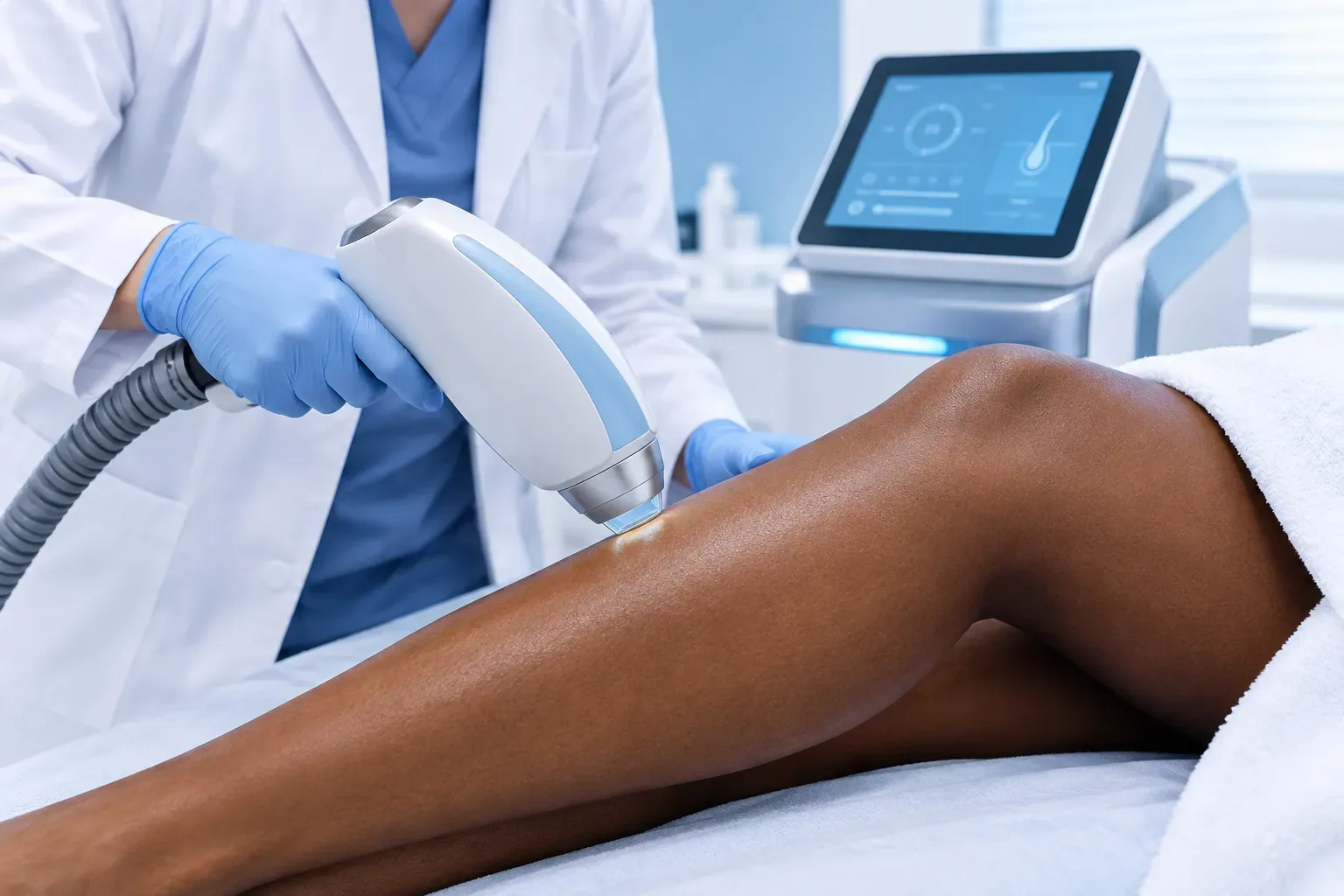
To put it simply, RF microneedling is not a treatment that automatically becomes more effective as its intensity increases. Needle depth, radiofrequency energy, number of passes, and the thickness of the skin and fat layers in each area must be combined according to the treatment goal.[1][5]
The key point: Rather than the ‘number of lines’ or the ‘highest intensity,’ the more important criteria are which layer is being treated and why, the device’s approved indications, and the practitioner’s anatomical planning.
What is RF microneedling?
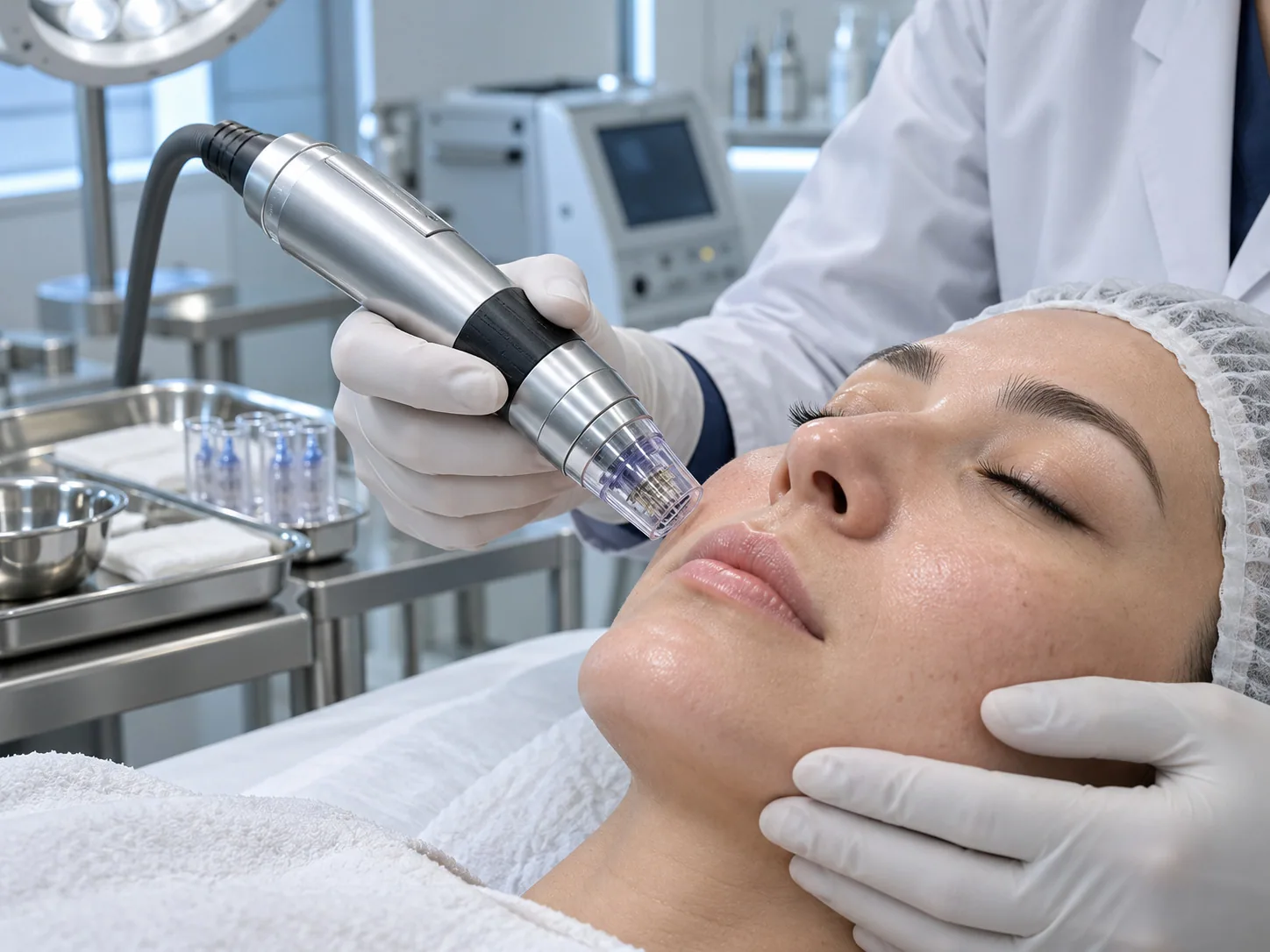
RF (radiofrequency) is high-frequency electrical energy, while microneedling uses very fine needles to create microscopic channels in the skin. RF microneedling delivers heat to the dermis through the needle tips or shafts to induce tissue remodeling. Results and risks vary depending on whether the needles are insulated or non-insulated, the depth of insertion, and the extent of heat spread.[5]
Does it help with acne scars and enlarged pores?
A 2025 systematic review analyzed 16 studies involving 481 patients with acne scars and found that RF microneedling may help improve scarring.[3] However, the devices, intensity levels, number of treatments, and assessment methods varied across studies. The review concluded that larger randomized trials are needed to establish optimal parameters. In other words, the results of one device cannot be applied directly to all RF needles.
How concerned should you be about burns, scarring, and fat atrophy?
On October 15, 2025, the U.S. Food and Drug Administration (FDA) announced reports of serious complications—including burns, scarring, fat loss, disfigurement, and nerve damage—following certain cosmetic uses of RF microneedling.[1] The notice warns that these risks exist but does not provide their incidence among all treatments.
An analysis of U.S. medical-device adverse-event reports from 2026 identified 145 events in 86 reports and found that fat loss, scarring, and post-inflammatory erythema were frequently recorded.[4] However, spontaneous reports have no denominator and may include duplicate or underreported cases, so it is not possible to calculate ‘what percentage’ of treatments result in these events.
What should you confirm during a consultation?
Treatment goal and depth
Fine superficial lines, deep scars, and jawline laxity involve different target layers. Rather than simply asking whether the entire face will be treated at the same depth, ask how depth and energy will be adjusted around the eyes, temples, cheeks, and jawline.
Identifying the device and tip
Confirm the device name, whether the tip is disposable, the number of needles, the insulation method, and the approved indications for use in your country. The FDA also considers RF microneedling a medical procedure—not an at-home beauty treatment—and recommends receiving it from a trained medical professional.[1][2]
Recovery and alternatives
Temporary erythema, swelling, pain, and pinpoint bleeding may be common.[2] For acne scars, other methods—such as subcision, fractional lasers, or TCA CROSS—may be more suitable depending on the scar type. If there is active inflammation or infection, or a tendency toward keloids, the risks should be assessed first.
Frequently asked questions
Will lowering the intensity make the treatment ineffective?
No. The appropriate intensity varies according to the treatment goal, treatment area, and skin condition. Excessive heat can extend damage beyond the target tissue, so the key is not to go ‘as strong as possible,’ but to deliver the energy required to the planned layer.
If hollowing appears after the treatment, should I wait it out?
As swelling subsides, the contours may temporarily appear different. However, if persistent depressions or asymmetry, severe pain, blisters, or changes in sensation occur, seek immediate assessment from the treatment provider or a dermatologist. Do not try to cover it up with self-massage or additional heat treatments.
DERME VERDICT
The quality of RF microneedling is determined not by maximum output, but by the indication, device characteristics, depth selected for each area, and the practitioner’s training. During a consultation, confirm not only the expected benefits but also serious risks—including fat loss and scarring—and the response pathway if warning signs develop.
- Source
- [1]U.S. FDA·Potential Risks with Certain Uses of RF Microneedling·2025-10-15
- [2]U.S. FDA·Microneedling Devices·2025-10-15
- [3]PubMed·Radiofrequency Microneedling for Acne Scars: A Systematic Review·2025
- [4]PubMed·Adverse Events Following RF Microneedling: MAUDE Analysis·2026
- [5]PubMed·RF Microneedling: Physics and Practical Implications·2024