Shower filters can reduce residual chlorine under certain conditions, but that single function does not mean they have been shown to treat acne or hair loss, or to soften hard water. When choosing a product, check first what it is certified to reduce, and by how much, rather than relying on language about “clean water.”
On October 23, 2026, Vogue reported that the beauty industry was expanding anxiety about air pollution, water quality and microplastics into “purification” products.[1] Shower filters have appeared as though they were a new step in skincare, but consumers are buying filter performance, not an atmosphere. Advertising images showing changes in the skin and independent test reports are not the same kind of evidence.
What exactly do shower filters reduce?
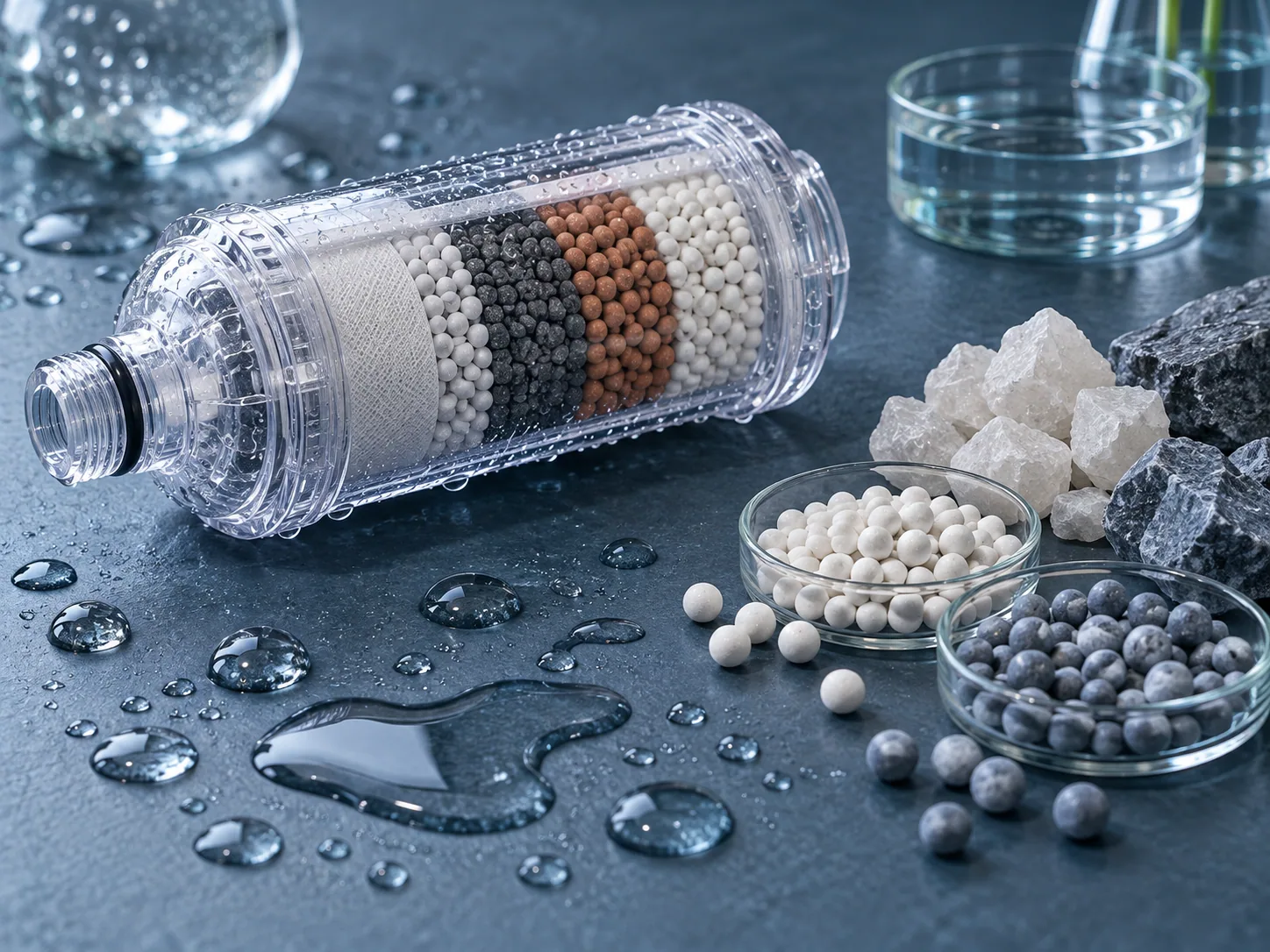
NSF/ANSI 177 is a representative certification standard for verifying a shower filter’s performance in reducing free residual chlorine.[2] NSF explains that this standard addresses “only” the reduction of free residual chlorine. Therefore, NSF 177 certification should not be read to mean that calcium and magnesium, PFAS, heavy metals and microorganisms are all removed.
Even products that appear to carry the same certification mark may differ in their certified model names and performance claims. Match the exact models of the product body and cartridge against the official certification list, and check the test flow rate and expected treatment capacity. “Made with NSF materials” on a sales page is not the same as saying that the finished product has received NSF performance certification.
Why distinguish chlorine from hard water?
Residual chlorine is associated with the disinfection process used for tap water. Hard water is water containing high levels of minerals such as calcium and magnesium. If a chlorine-reduction cartridge does not meaningfully remove the minerals that cause hardness, the water may still be hard.
Studies have reported an association between hard water and atopic dermatitis. A 2021 systematic review found a positive association between living in a hard-water area and the risk of atopic dermatitis in children, but evidence that using a water softener to treat existing atopic dermatitis improves objective severity was limited.[3] An association is not the same as evidence that a filter is a treatment.
If your skin feels tight, should you buy a shower filter first?
Before buying one, separate out less expensive variables first. Hot water, long showers, strong cleansers and frequent exfoliation can all cause tightness after washing. For two weeks, try lukewarm water, shorter showers, fragrance-free cleanser and moisturizer applied to damp skin, then record whether symptoms remain.
Experimental research also suggests that the skin retention and barrier damage associated with the cleansing ingredient SLS (sodium lauryl sulfate) may vary according to water hardness.[4] This finding is a clue that rinsing and cleanser choice matter in hard water; it is not a product clinical trial showing that a particular shower filter treats eczema. Those with sensitive skin should adjust cleanser quantity and shower temperature along with considering a filter.
What questions can help screen acne and hair-loss advertising?
The first question is whether there is a controlled trial of the finished product used on people. If a simple chlorine-reduction test is used to claim effects on sebum, follicular inflammation or hair growth, the evidence has skipped several steps. Second, ask whether the testing was conducted on an ingredient or the finished product; third, ask whether the data come from the company itself or from independent verification.
Acne is a condition involving a combination of follicular blockage, sebum and inflammation, while hair loss has many possible causes, including genetics, hormones, the immune system, traction and nutrition. Reducing a particular component of water alone cannot treat all the causes of either condition. A shower filter may make the skin feel less tight or the hair feel softer, but record these sensations separately from new hair growth or a reduction in lesions.
Four things to check before buying a shower filter
Write down ① the exact model name in the official certification list ② the substances certified for reduction ③ the rated flow rate and cartridge life ④ the replacement cost. Then add your own goal in one line. “I want to reduce the smell of chlorine” and “I want to soften hard water” may require different equipment.
FAQ | Will a vitamin C filter allow vitamin C to be absorbed by the skin?
The ability to neutralize chlorine and the delivery of an active ingredient to the skin are separate issues. Unless human trials of the finished product demonstrate skin absorption and clinical effects, do not interpret a “vitamin shower” as a skincare treatment.
FAQ | Can I use the filter until I receive a replacement reminder?
Service life varies depending on usage and the quality of the incoming water. Consider the manufacturer’s rated capacity alongside actual water pressure and changes in odor, and do not use an old cartridge indefinitely.
DERME VERDICT | Buy the certified statement, not the certification mark
A shower filter is a household product, not an all-purpose skin treatment. Check the certification’s exact wording—“NSF 177 = reduction of free residual chlorine”—and demand separate evidence for claims about hard-water softening, acne and hair loss. That way, you can buy only the performance you need instead of buying into the broad emotion of purification.
Sources
[1] Vogue Business · Beauty Brands Are Chasing Purity in a Polluted World · 2026-10-23
- Source
- [1] Vogue Business·Beauty Brands Are Chasing Purity in a Polluted World·2026-10-23
- [2] NSF·NSF/ANSI 177 Shower Filter Certification
- [3] Clinical & Experimental Allergy·The effect of water hardness on atopic eczema, skin barrier function·2021-01-01
- [4] Journal of Investigative Dermatology·The Effect of Water Hardness on Surfactant Deposition·2018-01-01