The takeaway: The U.S. Food and Drug Administration’s authority to order a mandatory cosmetic recall is not a mechanism that is automatically triggered by every minor labeling error. It may be used when a product is legally noncompliant and there is a reasonable probability that its use or exposure could cause serious adverse health consequences or death, after the company has been given an opportunity to conduct a voluntary recall.[1][2]
On October 22, 2026, the FDA issued its final guidance, “Questions and Answers Regarding Mandatory Cosmetic Recalls.”[1] The document explains how to apply in practice the authority created by the Modernization of Cosmetics Regulation Act of 2022, or MoCRA. For consumers, the important change is not speculation that recalls have become more common, but that there are now clearer standards for reading recall notices.
When can the FDA order a mandatory cosmetic recall?
Two conditions must be met. First, the cosmetic must be adulterated—for example, because it has deteriorated or is contaminated—or its labeling must violate the law. Second, its use or exposure must present a reasonable probability of causing serious adverse health consequences or death.[2] This threshold is different from a product simply having an unpleasant fragrance or an inconvenient container.
The FDA does not begin by issuing an order immediately; it first gives the responsible person an opportunity to conduct a voluntary recall. Here, the responsible person means the manufacturer, packer, or distributor whose name appears on the product label.[2] Mandatory procedures may follow if the company refuses to recall the product or fails to carry out an adequate recall.
What is the difference between a voluntary recall and a mandatory recall?
A voluntary recall is when a company removes a problem product from the market on its own. “Voluntary” does not mean the risk is minor. Conversely, the term “mandatory recall” alone does not establish that the scale of harm is greater. The difference lies in who initiates the process and which legal authority is being exercised.
The final guidance explains that soaps and products that fall within the categories of drugs or medical devices are not handled under the same mandatory cosmetic recall provisions.[2] Even if a product appears to be a “cleansing bar,” its legal classification may depend on its ingredients, labeled intended use, and claims. The regulatory category should not be determined from the product name alone.
Does a recall notice mean the entire brand is dangerous?
Usually not. Recalls generally narrow the scope by product name, size, manufacturing number or lot, expiration date, and distribution area. The FDA guidance explains that, to reduce confusion, a notice may also identify similar products that are not included in the recall.[2] Rather than discarding every product on your vanity based only on the brand name, check whether your specific product falls within the stated scope.
The first line to read closely is “Why was it recalled?” Microbial contamination, prohibited ingredients, undeclared allergens, and packaging problems require different responses. Do not focus only on a company’s phrase “as a precaution”; also read the health risks and consumer instructions provided by the FDA or other regulatory authority.
What should consumers check in a recall notice?
1. Product identification information
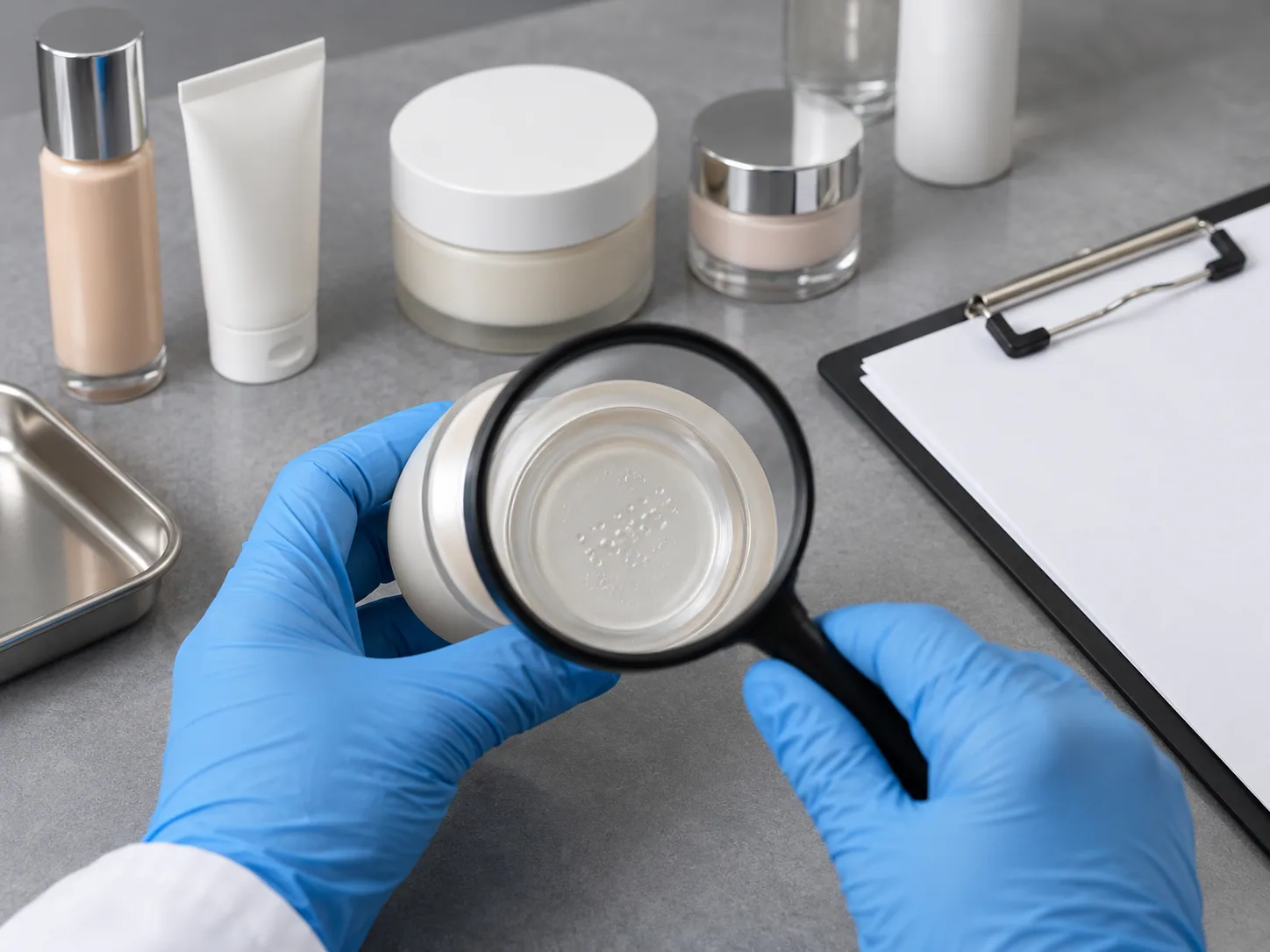
Check the product name, color or fragrance, size, UPC, lot number, and expiration date. If you have discarded the outer box, look for printing on the bottom of the container or along its seams. An online order record may not identify the lot number.
2. Exposure route and risk
The risk can vary depending on where the product is used, such as around the eyes, on the lips, or on damaged skin. If there are no symptoms, distinguish between a notice that calls for an immediate visit to the emergency department and one in which stopping use and seeking a refund are the priorities. Follow the symptoms and contact information provided in the notice.
3. Return or disposal instructions
Do not transfer a recalled product into another container on your own. Before returning it, photograph the lot number and receipt, and follow the company’s instructions for collection. Do not give products that may be contaminated with microorganisms to family members or acquaintances.
What if a Korean consumer bought a product imported directly from the United States?
Do not assume that the Korean shipments are automatically included in a U.S. recall notice. The formula, packaging, and lot may differ by country even within the same brand. Match the identifying information in the FDA notice with the seller’s order records, then ask the official seller or manufacturer whether imported lots are included.
An overseas recall does not immediately determine the safety of products sold domestically, but there is no reason to ignore it. Until it is confirmed whether the products came from the same manufacturing site and the same lot, temporarily stopping use is a possible cautious choice. If you experience a skin abnormality, keep the product and its packaging, and record when you used it and photograph the symptoms.
Frequently asked questions
Q. Does a “mandatory recall” mean that many people have already been harmed?
That cannot be assumed. The legal standard considers not only the number of people actually harmed but also the reasonable probability of serious consequences occurring.[2] Read the notice with the number of confirmed cases and the potential risk distinguished from each other.
Q. What should I do if I learn about the recall after using up the product?
If the lot can be identified, keep the order record and photographs, and check the symptoms listed in the notice. If you have symptoms, tell a medical professional the product name, lot number, and period of use, and use the reporting channels provided by the company and regulatory authorities.
Q. Does a product with no recall have completely guaranteed safety?
No. A recall is a post-market measure addressing a specific identified problem. Even a product that is not subject to a recall may cause irritation depending on the area of use, an individual’s allergies, and storage conditions.
DERME VERDICT | Read the lot number, not just the brand reputation
The practical significance of this final guidance is not to broaden the scope of public fear. It is to identify risky products more precisely and show the order in which companies and the FDA act. When you see a recall notice, do not stop at the brand name; fill in four boxes—product, lot, risk, and instructions. That is the quickest way to translate a regulatory document into a consumer’s next step.