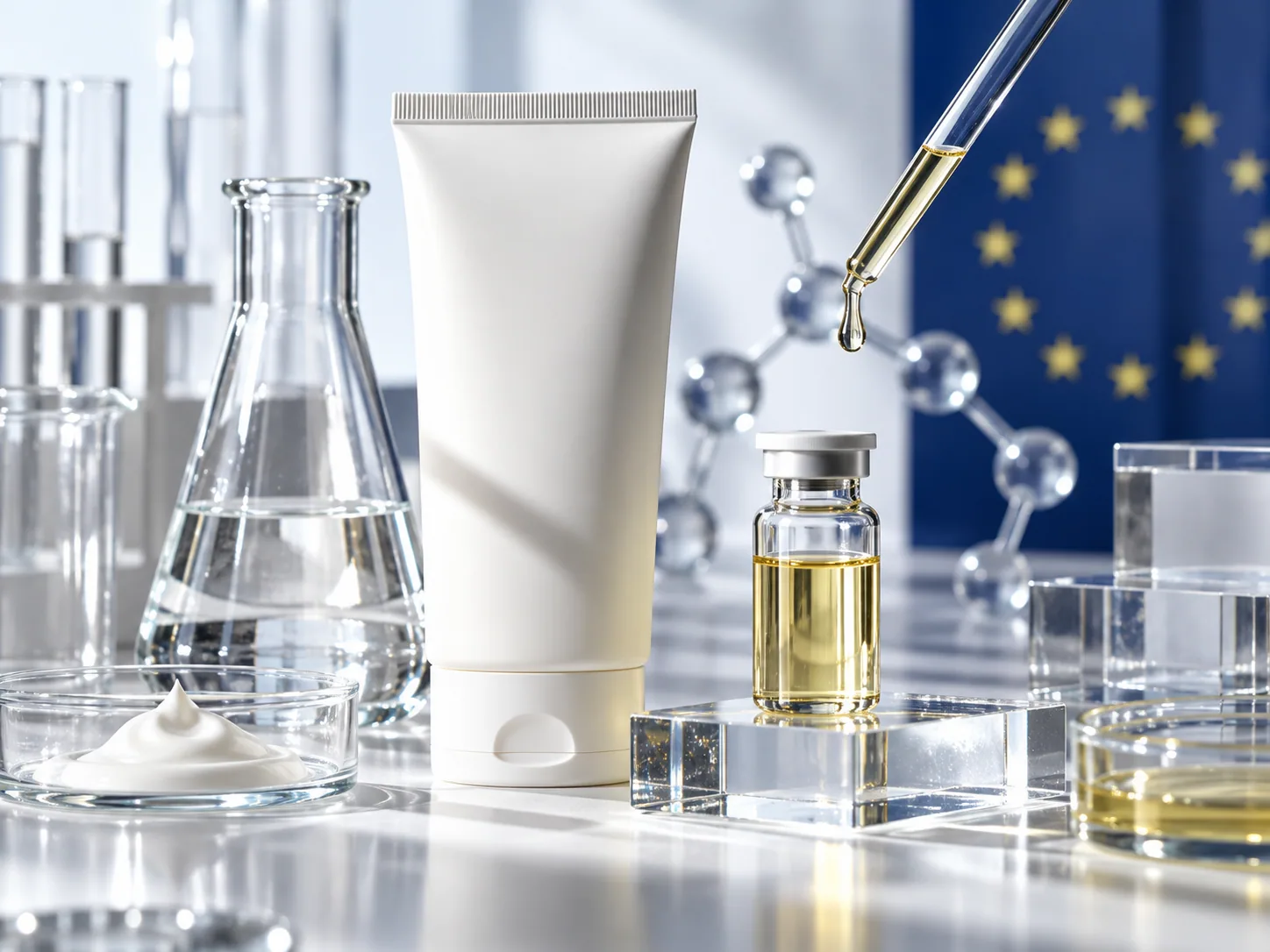
The key point: The EU’s restriction on microplastics is not a rule that bans “all glitter products” on a single date. Instead, it applies different transition periods depending on the material and use of non-degradable, insoluble synthetic polymer particles.
The European Commission explains that Regulation (EU) 2023/2055 began to apply on October 17, 2023. However, glitter and microplastics in cosmetics are subject to product-specific transition periods, so their sale status in 2026 cannot be summed up in a single sentence.[1]
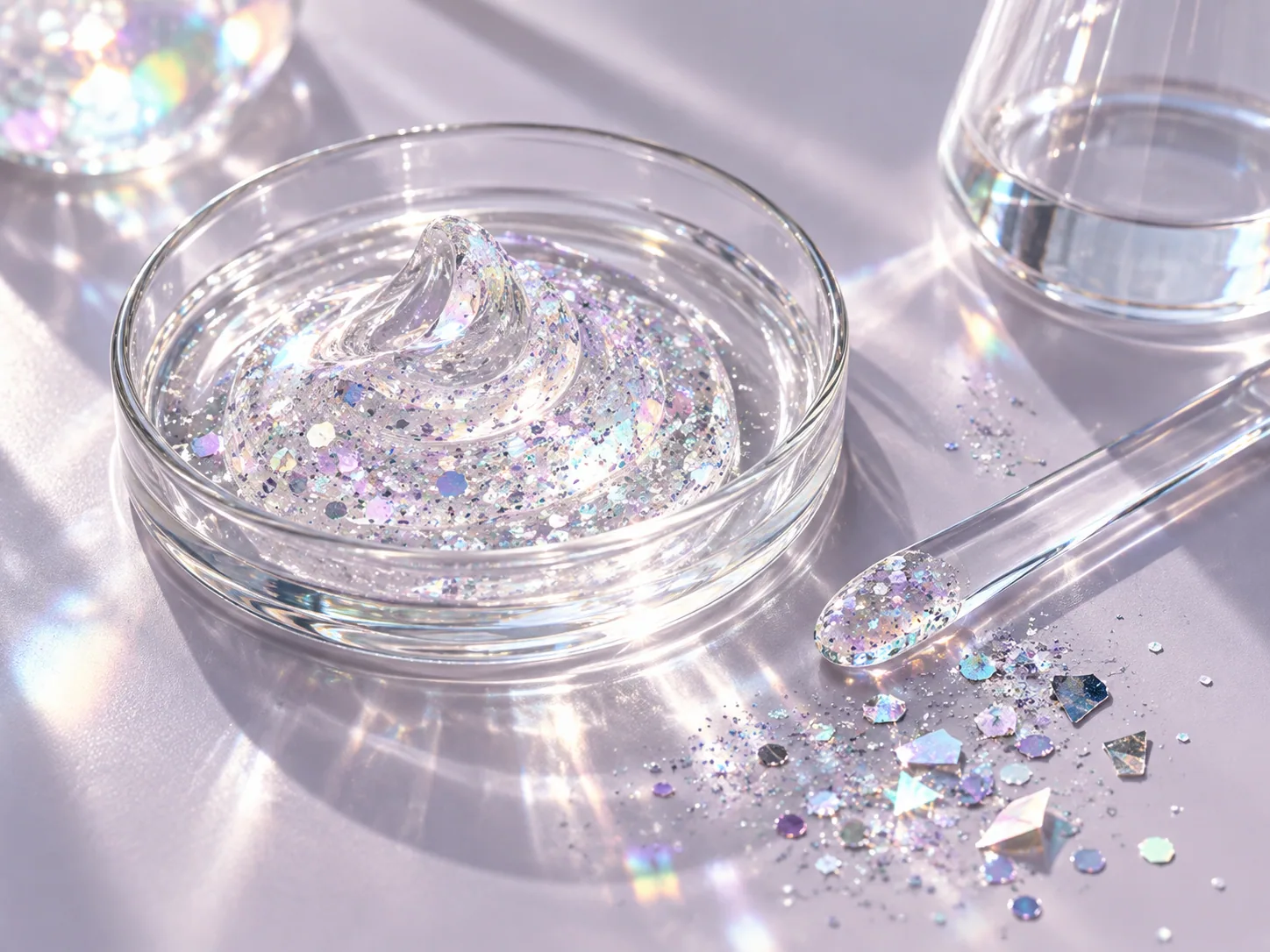
Are all glitter cosmetics currently banned from sale?
No. The materials primarily covered by the restriction are plastic glitters that do not dissolve in water and are not biodegradable. Natural, inorganic, water-soluble, and biodegradable materials may fall outside the definition of microplastics. There may also be specific exemptions, such as materials permanently fixed in a solid matrix.[1]
The material cannot be identified simply because the product sparkles. Mica, glass, metal, and synthetic polymers may look similar, so the product description and manufacturer’s information should be checked.
What are the 2027, 2029, and 2035 deadlines for?
According to the European Commission’s guidance, rinse-off cosmetics are covered by a transition period until October 16, 2027, while leave-on cosmetics applied to and left on the skin or hair have a transition period until October 16, 2029.[1]
Makeup, lip, and nail cosmetics are given a longer transition period, until October 16, 2035. However, to continue being sold from October 17, 2031, through October 16, 2035, the product must carry an indication that it contains microplastics.[1]
Does this restriction mean that skin toxicity has been confirmed?
It should not be interpreted that way. The central aim of this restriction is to reduce the environmental release and pollution caused by intentionally added microplastics. That is a different regulatory rationale from a clinical conclusion that a specific glitter product is toxic to the skin.[1]
Consumer safety requires separate consideration of whether the product is suitable for use around the eyes, the permitted range of lip pigments, the possibility of irritation, particle size and edges, and friction during removal. The term “eco-friendly” also does not guarantee both safety and environmental performance without specific information about the material and degradation conditions.
What should you check on the product label?
First, check the glitter’s material. Second, determine whether it is rinse-off or leave-on. Third, see whether the intended area of use—such as the eye area, lips, or nails—is clearly specified. Fourth, check the latest labeling requirements and transition deadlines in the market where the product is sold. Fifth, look for testing conditions and supporting evidence behind any “biodegradable” claim.
FAQ
Will lip products containing plastic glitter be illegal in 2026?
Based on the EU guidance alone, makeup, lip, and nail cosmetics have a transition period until 2035. However, the material used in an individual product, when it is distributed, and whether it complies with other cosmetics regulations must be checked separately.[1]
Does “bio glitter” automatically fall outside the restriction?
It cannot be determined from the name alone. Manufacturer documentation is needed to establish whether the actual material meets regulatory requirements such as biodegradability or water solubility.
Do Korean consumers need to pay attention to these deadlines too?
They are relevant when choosing products intended for export to the EU or when buying from overseas. However, the legality of sale and labeling requirements in Korea are governed separately by Korean cosmetics legislation.
DERME VERDICT
Both “a total ban on glitter” and “nothing is changing” are inaccurate. Check the material, method of use, transition deadline, and labeling rather than the product’s sparkle alone. For consumers in 2026, the most practical question is: “What particles make this product sparkle, where is it used, and which market’s standards does it follow?”