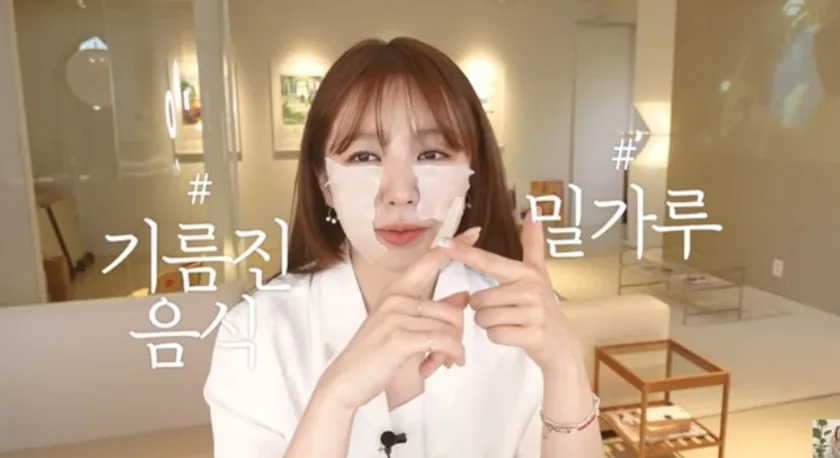
When you see glossy, flowing hair, you may wonder which treatment was used. On October 5, 2026, Vogue Korea released a “Beauty Secret” feature covering Jang Wonyoung’s morning routine and hair care. The outlet disclosed that the video included paid advertising for Kérastase. The care routine shown can serve as a reference, but the shine on screen alone cannot determine hair health or the treatment effects of any particular product.[1]
In autumn, the question shifts slightly. The ends feel dry, while the crown looks less full, and the amount of hair in the drain after a shower starts to seem noticeable. Before deciding whether to apply more conditioner or seek a scalp examination, first separate what has changed. Hair that breaks easily and a reduction in the thickness or number of hairs growing from the follicles are not the same problem.
Look at whether the ends are splitting or the part is widening
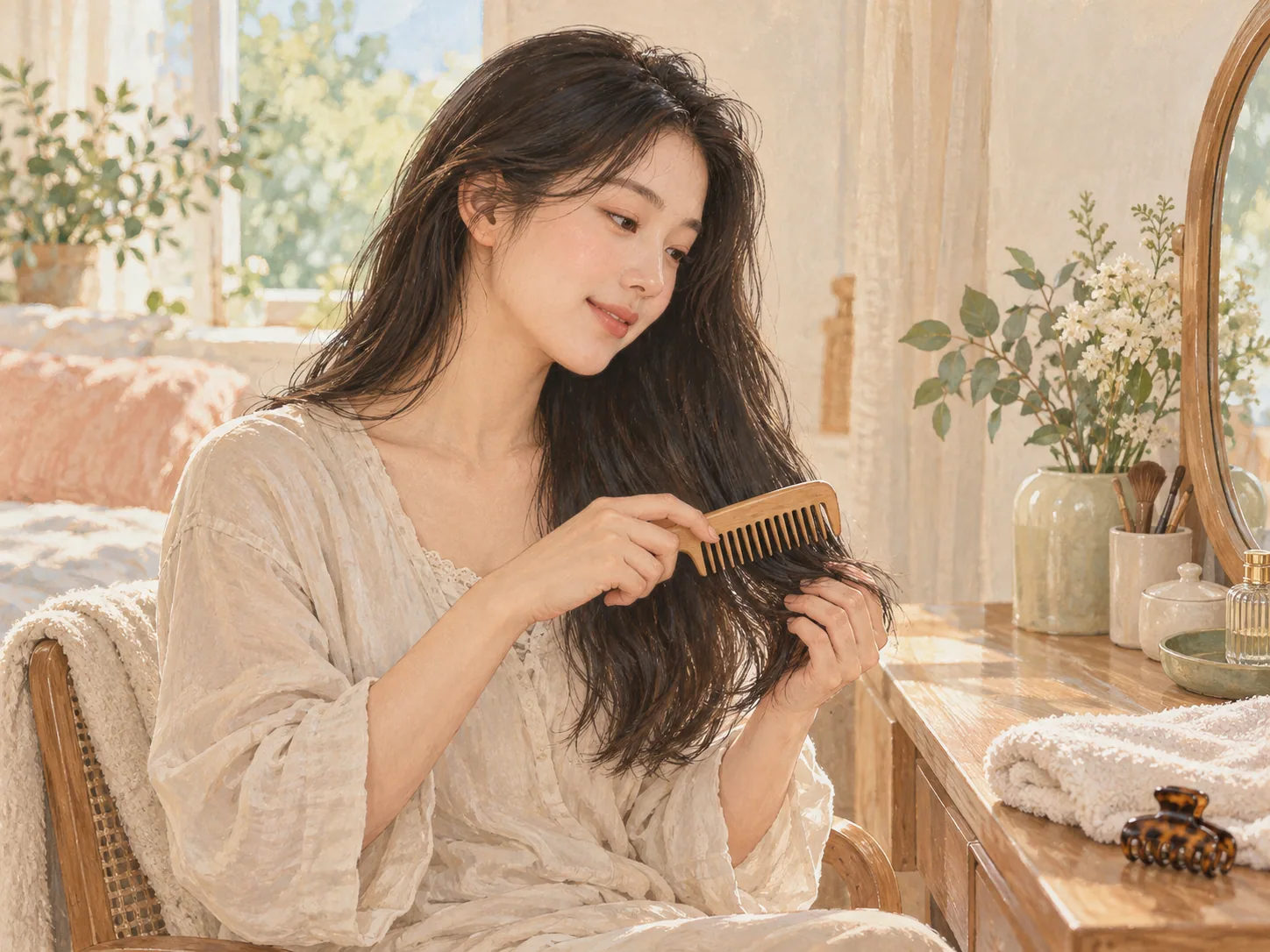
If the ends frequently tangle while brushing and short broken hairs stand out, damage from heat, friction, or repeated chemical processing may be involved. At this stage, care means reducing tangles with conditioner and changing how you handle your hair. The American Academy of Dermatology explains that vigorously rubbing shampoo through the entire length of the hair or roughly rubbing it with a towel can also increase damage.[2]
By contrast, if the center part gradually widens and the hair at the crown becomes thinner, the condition of the scalp and follicles should be examined. Seoul National University Hospital describes female pattern hair loss as a pattern in which the front hairline is relatively maintained while the hair in the central area becomes thinner and sparser. If a specific area becomes round and bare or there is a sudden, generalized increase in shedding, other causes should also be considered.[3]
This distinction is not a basis for assigning yourself a diagnosis at home. It is a starting point for explaining when the change began, where it occurred, and what it looks like, rather than simply saying that your hair feels “dry.” Bringing photos of your usual part and details of recent lifestyle changes to an appointment can make the consultation much more specific.
Even sleek pulled-back styles need less tension
A ponytail or bun that reveals the face is convenient. However, repeatedly securing the hair by pulling it tightly, including at the sides, can place strain on the follicles. Hair loss caused by this kind of tension is called traction alopecia. If your scalp hurts or stings after tying your hair, it is not a style to maintain by simply enduring the discomfort.[4]
Even if you tie your hair neatly for work, let it down at home and switch to a looser style so the same area is not continually pulled. Broken hairs around the forehead, a receding hairline, or sparse areas where the hair is being pulled are reasons to consider an examination. Long-standing traction alopecia can become more difficult to reverse, so it is not something to wait out while applying only hair essence.[4]
Heat should be reduced as well. Instead of passing a high-temperature iron over the same section several times every morning, briefly tidy only the areas that need it. Use a lower setting on the hair dryer, and use a towel to press out moisture rather than rub it away. When you are concerned about damage, change the movements you repeat every day before buying another product.[2]
When not to dismiss shedding as simply seasonal
Seoul National University Hospital explains that the hair-growth cycle may undergo seasonal changes. However, not all shedding can be considered normal simply because it is autumn. If comparison with earlier photos shows a wider part, a receding hairline, or hair that continues to become thinner, those changes should be examined separately.[5]
It is also important to consider whether, in the past few months, your body experienced a strain such as childbirth, major surgery or a fever, or severe dietary restriction. After such changes, more hairs may shift into the resting phase at once, causing increased shedding known as telogen effluvium. Because there may be a gap between the cause and when the hair begins to fall out, do not assume that the shampoo you changed this week is the cause.[3]
There is no need to tug forcefully at your hair every day or focus only on the number of hairs shed as a way of checking yourself. If you take photos, matching the parting direction and lighting can make comparisons more useful. However, photo records should not become a reason to delay an examination. If a bare area appears suddenly or is accompanied by scalp pain, redness, or sores, discuss the symptoms themselves.
Recommendations from Director Kang Jeong-ha
In daily life, begin by adjusting three things. First, focus shampooing on gently washing the scalp, and do not pull tangled hair forcefully. Second, reduce the heat and contact time from blow-drying and straightening irons. Third, secure the hair loosely enough that tying it does not cause pain, and change the area being pulled. Care that reduces hair damage is the foundation of healthy-looking hair texture.[2,4]
Treatment should be selected according to the type of hair loss. When female pattern hair loss has been diagnosed, topical minoxidil and other options may be considered. As product concentrations and intended users may differ, confirm suitability with a doctor or pharmacist before use. Effects should be evaluated over time; do not decide that it has succeeded or failed after using it for only a few days.[3,5] If you are pregnant, planning to become pregnant, or breastfeeding, avoid using minoxidil and consult a medical professional about alternatives.[6]
If shedding has suddenly increased, check for recent health changes and your dietary status, and undergo tests for possible causes when indicated by the examination. If a deficiency or underlying condition is identified, correcting it is central to treatment. For alopecia areata, separate treatments such as topical steroids may be considered. This is why you should not simply choose a medicine or injection because someone around you saw results with it.[3]
If you want glossy hair, start with care that reduces damage; if you have noticed a change in hair density, start with an examination to distinguish the cause. Both may be needed together, but no single hair-care product can answer every concern.
This article provides general health information; individual diagnosis and treatment are determined through medical consultation.
Sources
[2] American Academy of Dermatology — How to stop damaging your hair
[3] Seoul National University Hospital Medical Information — Hair Loss
[4] American Academy of Dermatology — Hairstyles that pull can lead to hair loss
[5] Seoul National University Hospital — Hair Loss: Unavoidable, but It Can Be Delayed

Fascinating Skin Stories for Healthy Skin
Drawing on 16 years of experience running Seolleim Clinic in Gangnam, Director Kang Jeong-ha presents accessible, friendly stories about dermatology, including practical skin-care methods for everyday life and engaging topics involving celebrities, public figures, and television. Through professional knowledge and experience, she aims to help your skin look healthier and more beautiful. Through this series, she hopes you will broaden your understanding of skin and discover ways to care for yourself.
Director Kang Jeong-ha (Seolleim Clinic Gangnam)