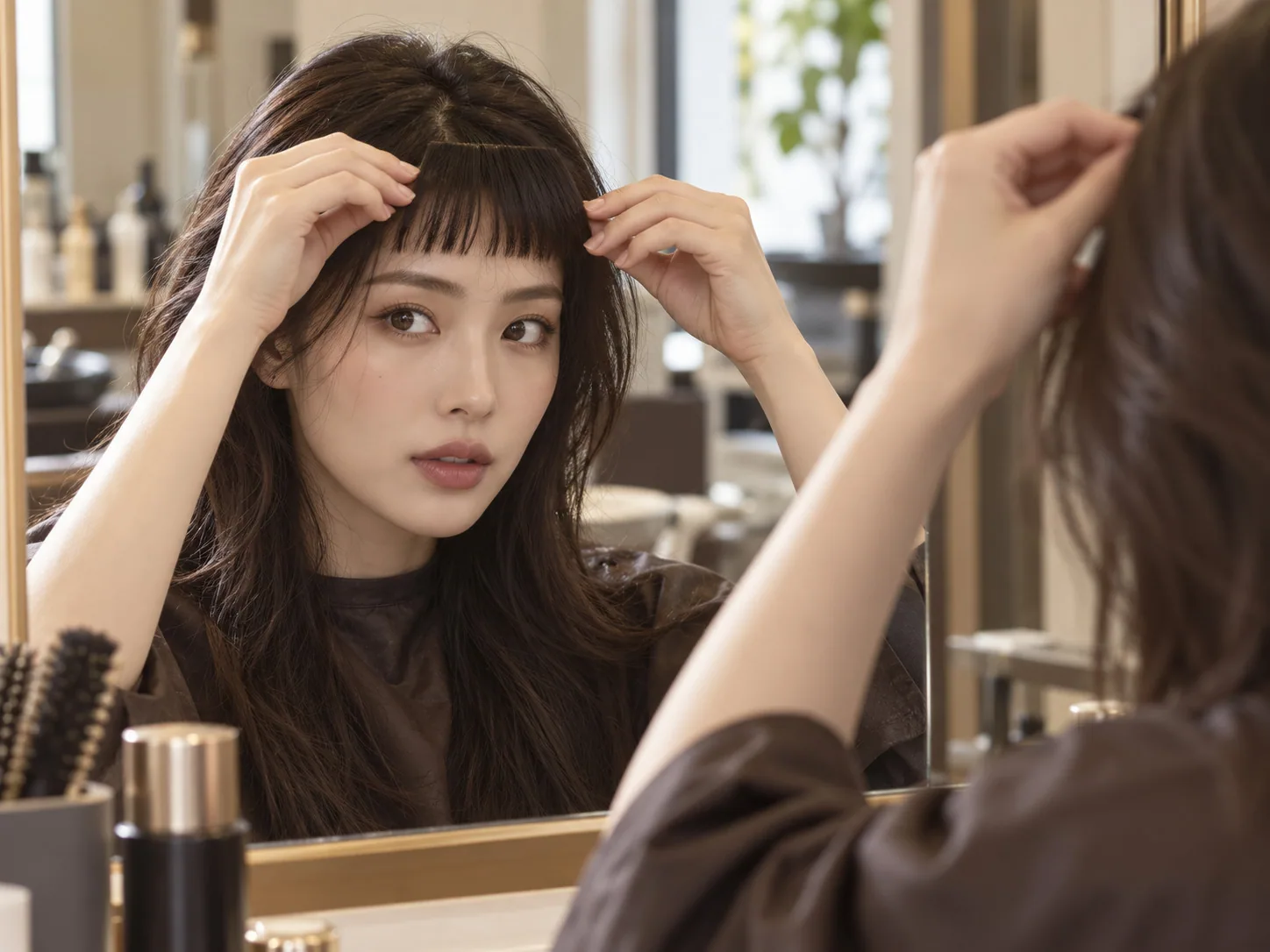
To put it simply, a bun hairstyle itself does not cause hair loss. The problem is the prolonged, repeated tension of pulling the hair tightly in the same direction. If your scalp hurts after tying your hair or broken short hairs appear along the hairline, switch to a looser style.[2][3]
The key point: Keep enjoying pretty updos, but tie them with “tension that causes no pain,” and reduce the strain placed on the follicles by changing the position and direction each day.
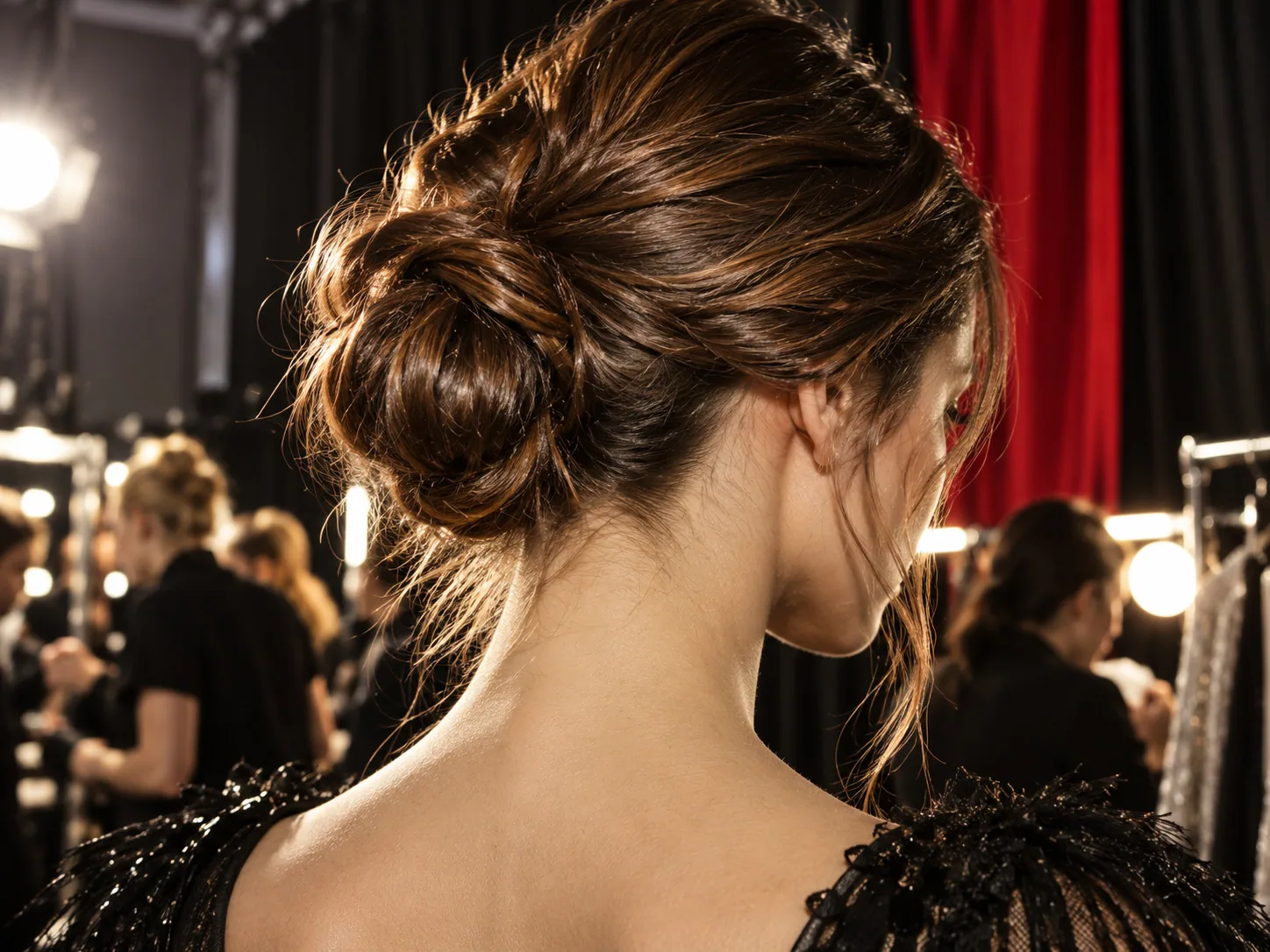
On October 11, 2026, Vogue Korea spotted 57 variations—including round buns, low buns, and sleek buns—at Chanel’s Spring/Summer 2027 show.[1] Even with the same bun, a loose texture and a tightly slicked style exert different levels of force on the scalp. Rather than reproducing one runway look in exactly the same way every day, adjust it to suit your hair thickness and the condition of your hairline.
What Is Traction Alopecia, and Why Does It Happen?
Traction alopecia is hair loss caused by accumulated damage around the follicles when the hair is repeatedly pulled. The American Academy of Dermatology cites styles that create sustained tension—such as tight buns, ponytails, braids, and extensions—as common causes.[2] In the early stages, stopping the cause may allow recovery, but if it continues for a long time and scarring develops, the hair loss can become permanent.[4]
What Are the Signs That an Updo Is Too Tight?
The first sign is not how “polished” it looks, but pain. If your scalp throbs immediately after tying your hair, your temples feel tight, or you see redness, bumps, or short broken hairs along the hairline, the tension is excessive.[2] If the pain remains even after you let your hair down, or a particular area looks thinner, take a break from the same style.
Keeping the part and bun position fixed every day concentrates force on the same follicles. Wet hair stretches and breaks more easily than dry hair, so it is better to tie it after it has dried completely. A wide, soft band is less likely to cause friction than a thin, tight elastic.
4 Steps to Enjoying Bun Hairstyles More Safely
1. Tie It with Enough Tension to Avoid Pain
If the skin around your eyebrows or temples is pulled upward along with your hair as you tie it, it is too tight. Secure it loosely enough that one finger can fit comfortably inside the band.
2. Change the Height and Direction
Alternate between high buns, low buns, loose ponytails, and wearing your hair down. The key is not to pull on the same spot every day.
3. Apply Sleek-Styling Products to the Hair Surface, Not the Scalp
Use only as much gel or wax as needed on the surface of the hair. Pulling the hair tightly while product is applied can also increase friction when you wash it out. Gently undo the style after returning home and wash away any residue.
4. Check Your Hairline Once a Week
Check your temples and forehead hairline under the same lighting and from the same angle. Comparing photos a month apart is more useful than comparing them day by day. Sudden patchy hair loss or scalp conditions may have causes other than traction alopecia and require medical evaluation.
Frequently Asked Questions
How many times a week is it okay to wear a bun hairstyle?
There is no single safe frequency for everyone. Pain, pulling force, how long the style is maintained, and repeatedly using the same position matter more than the number of times. If discomfort develops, let your hair down that day and switch to a low-tension style for several days.
Will traction alopecia grow back?
In the early stages, stopping the causative style may allow recovery. However, if the area looks like smooth, shiny scarred skin or the condition has lasted a long time, recovery may be limited.[4] That is why it is important to stop the cause promptly.
DERME VERDICT
What to take from the bun hairstyles at Chanel’s show is not one fixed shape, but the idea of experimenting with different variations. Tie your hair loosely, without pain; change the position; and check for redness and breakage along the hairline. If an area of hair loss is already enlarging or inflammation keeps recurring, stop styling and prioritize seeing a dermatologist to determine the cause.
Sources
[1]Vogue Korea · Hairstyle Spotted No Fewer Than 57 Times at the Chanel Show · 2026-10-11
[2]American Academy of Dermatology · Hairstyles that pull can lead to hair loss · 2024-11-06
[3]PubMed · Traction alopecia · 2024
[4]PubMed · Traction alopecia: the root of the problem · 2017