The short answer: personal makeup brushes should be washed once every 7–10 days. Wet the bristles, wash them with a mild cleanser, then lay the brush flat to dry so moisture does not seep into the handle. That is the basic method.[1]
The key point: Brush hygiene helps reduce the reaccumulation of sebum, dead skin cells, and product residue, but washing alone cannot treat acne.
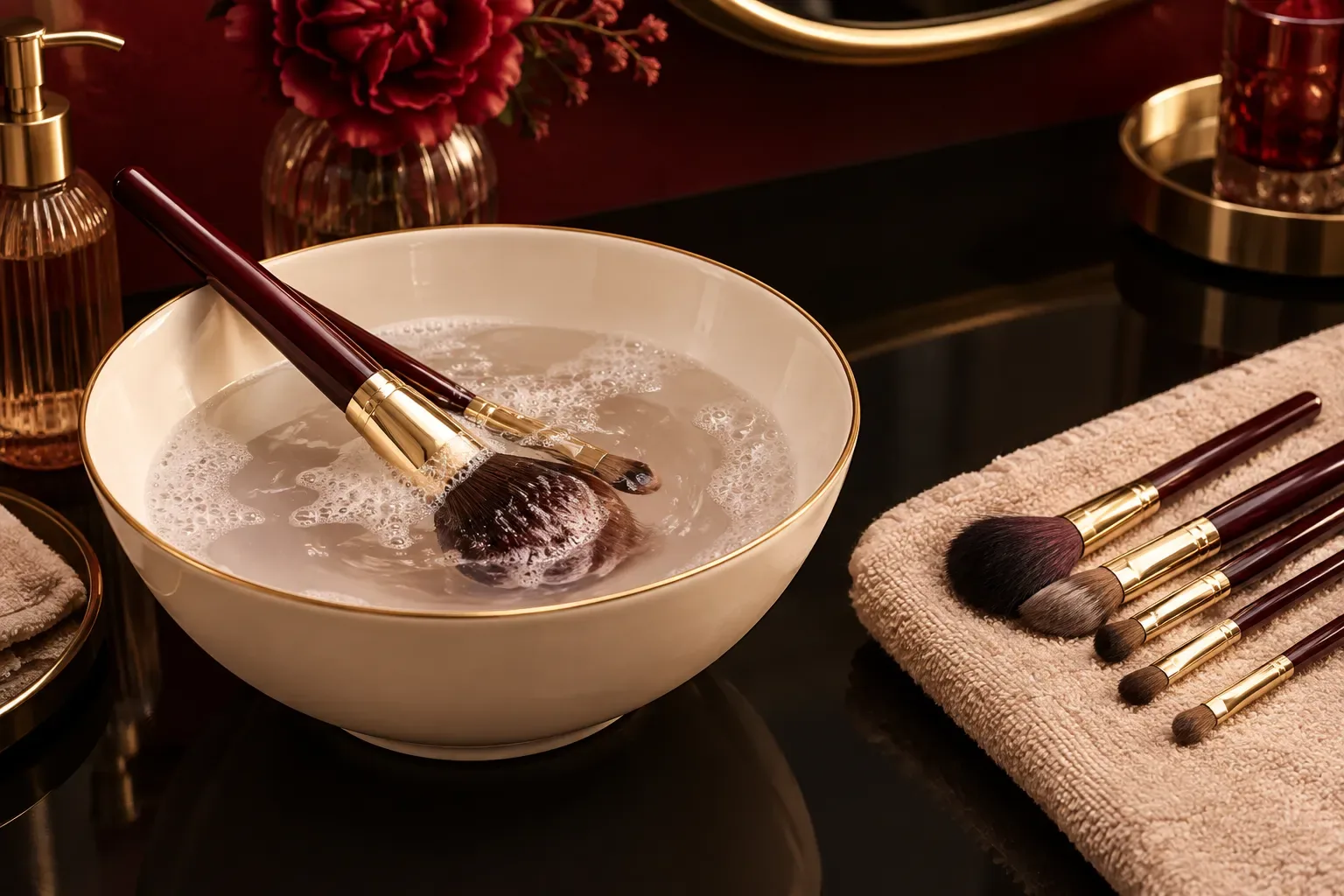
Why should makeup brushes be washed every 7–10 days?
Brushes repeatedly pick up facial sebum, dead skin cells, and products such as foundation. The American Academy of Dermatology (AAD) recommends washing them every 7–10 days to help reduce the possibility that harmful bacteria remain on them.[1]
A 2025 study examining tools used by local users and makeup professionals in Jeddah found several types of bacteria on brushes, including Staphylococcus and Micrococcus.[2] The study shows that contamination can occur, but it did not establish a causal relationship in which a specific brush directly caused acne or infection in a specific person.
Can brushes and puffs be washed the same way?
Wet only the brush tips with lukewarm water, then lather them with a mild shampoo or dedicated cleanser. Rinse until the water runs clear, and press out excess moisture with a clean towel.[1] Hot water or prolonged soaking can damage the adhesive holding the bristles together and the handle.
Puffs and sponges can easily retain moisture and liquid products inside. It is safer to wash them immediately after use and dry them completely, including the interior. Replace them when the surface cracks, an odor remains, or discoloration and slippery residue persist after washing.
How should washed brushes be dried?
If you dry brushes upright in a cup, water can run into the metal ferrule and handle, loosening the adhesive. The AAD advises reshaping the bristles and laying the brush flat on a towel or along the edge of a counter to air-dry.[1] Avoid hot air from a hair dryer, which can deform the bristles.
Do not put wet tools straight into a pouch or lidded box. Once completely dry, store them in a low-dust, well-ventilated place. A dry drawer in a vanity is preferable to a bathroom, where humidity often rises.
Does acne-prone skin require daily washing?
Daily washing is not necessary for everyone. However, if you have inflammatory acne, use liquid foundation every day, or frequently expose the same tools to sweat and sebum, washing more often than once a week is reasonable.
For acne-prone skin, it is important to choose products labeled oil-free or noncomedogenic and not share brushes or cosmetics with others. The AAD explains that shared tools can pick up another person’s sebum, dead skin cells, and bacteria.[3]
Makeup Brush Hygiene FAQ
Is spraying only a brush cleaner enough?
No. Spray is convenient for temporary cleaning when switching between colors, but it cannot completely replace regular washing with water. Use it according to the product instructions and continue full washes every 7–10 days.
Is it really not okay to share a brush with a friend just once?
It is safest not to share tools that touch the eyes, lips, or inflamed areas. If professional tools must be used, confirm that a separately cleaned and disinfected tool is provided for each client.
Will washing brushes make acne disappear?
No. Washing only reduces one possible source of exposure. Deep, painful acne, inflammation that leaves scars, or a rash that spreads suddenly should not be addressed simply by changing makeup tools; dermatological care is needed.
DERME VERDICT
Choose an easy-to-remember day, such as Sunday night, to wash brushes every 7–10 days, and wash puffs more often. Four steps are enough: use a mild cleanser, rinse thoroughly, lay the tools flat to dry completely, and keep them for personal use. Hygiene is not a rule meant to fuel excessive anxiety, but a basic routine for reducing contaminants that come back into contact with the skin.
- Source
- [1] American Academy of Dermatology·How to clean your makeup brushes·Accessed 2026-10-12
- [2] International Journal of Microbiology·Assessing the Levels and Types of Bacterial Contamination in Cosmetic Brushes·2025-05-06
- [3] American Academy of Dermatology·I have acne! Is it okay to wear makeup?·Accessed 2026-10-12
- [1] 미국피부과학회·How to clean your makeup brushes·확인일 2026-10-12
- [3] 미국피부과학회·I have acne! Is it okay to wear makeup?·확인일 2026-10-12