The short answer: stories, nature sounds and meditation audio in sleep apps may be soothing as part of a bedtime routine, but there is not enough evidence to call them a “treatment for sleep disorders.” In a 2026 randomized trial, none of the three types of audio tools improved the primary sleep-disturbance score significantly more than the digital control group. [1][2]
The USleep study, published in the journal SLEEP, compared 495 working adults who reported sleep difficulties, with a mean age of 32.7 years, across four groups—bedtime stories, sleep sounds, sleep skills and a digital control—for four weeks. The study assessed a self-reported sleep-disturbance score as its primary outcome. [1]
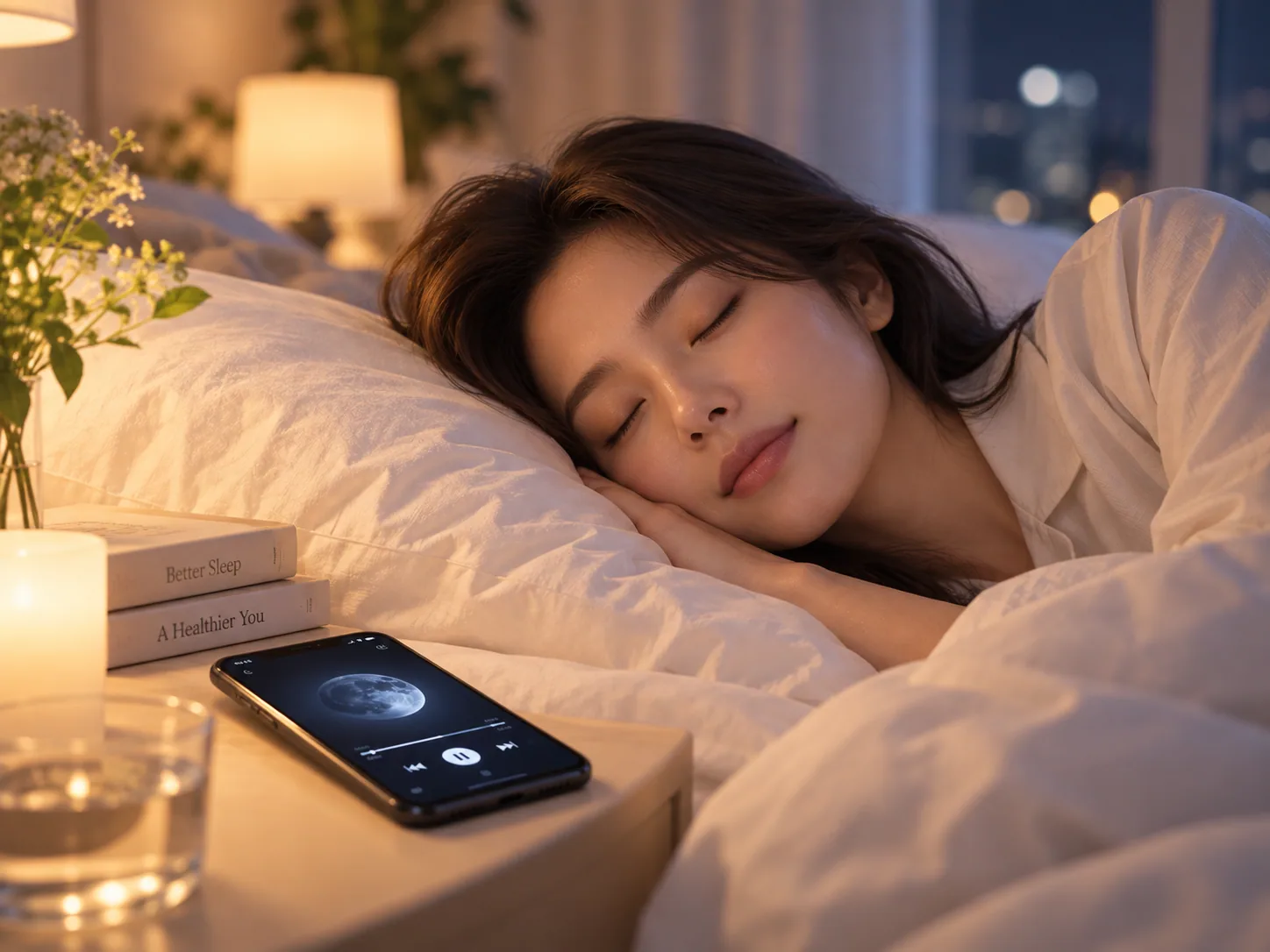
Did sleep sounds and bedtime stories actually have no effect?
It would not be accurate to say that “nothing changed.” Scores related to sleep improved over time within each group, but the central question was whether they improved more than in the control group. The effect sizes of all three audio groups compared with the control were very small and not statistically significant. [1]
Why did the control group improve too, even though it used the app?
In the study, the digital control group also completed prescribed activities within the app. In sleep research, factors such as participation itself, expectations, a consistent routine and the passage of time can affect outcomes. So “I improved compared with before using the app” and “I improved because of a specific app feature” are different questions.
Then is there any need to use sleep sounds?
There is no need to make that conclusion. If sounds or stories help reduce tension and make it easier to establish a bedtime routine, they can be used personally. However, if difficulty falling asleep has continued for several weeks or daytime functioning is affected, it is difficult to recommend trying to solve the problem with audio alone.
What should you prioritize first for good sleep?
The CDC explains that both sufficient sleep duration and sleep quality are important for adults. Adults aged 18–60 are generally recommended to get at least seven hours of sleep per day. Basic habits come first, such as keeping consistent bedtimes and wake times, maintaining a quiet, cool bedroom, reducing electronic-device use before bed, and avoiding late caffeine and heavy meals. [3]
Are sleep-app and smartwatch scores diagnostic tools?
Most consumer apps and wearables are reference tools for observing lifestyle patterns. Numbers such as a “sleep score of 80” cannot by themselves diagnose insomnia, sleep apnea or restless legs syndrome. Medical evaluation is needed if there is snoring and apnea, extreme daytime sleepiness or long-term insomnia.
FAQ. Is it okay to play white noise or nature sounds all night?
Many people use them at a low volume if the sound itself is not bothersome. However, listening for long periods at high volume while wearing earphones is not advisable for hearing or sleep comfort. When possible, it is better to use a speaker or timer so the sound plays only as long as needed.
FAQ. How many weeks of poor sleep should pass before I see a doctor?
There is no fixed number of days. If sleep problems make it difficult to concentrate during the day, create a risk of drowsy driving, prompt others to say that your breathing stops, or significantly affect your mood and work functioning, consider seeking medical care regardless of how long the problem has lasted.
DERME VERDICT
Sleep apps can serve as “tools for preparing for sleep,” but do not delay basic sleep habits or necessary medical care in the expectation of a treatment effect. First organize your sleep duration, consistent wake time, and caffeine and electronic-device habits; it is more realistic to use an app as a support that makes it easier to maintain that routine.