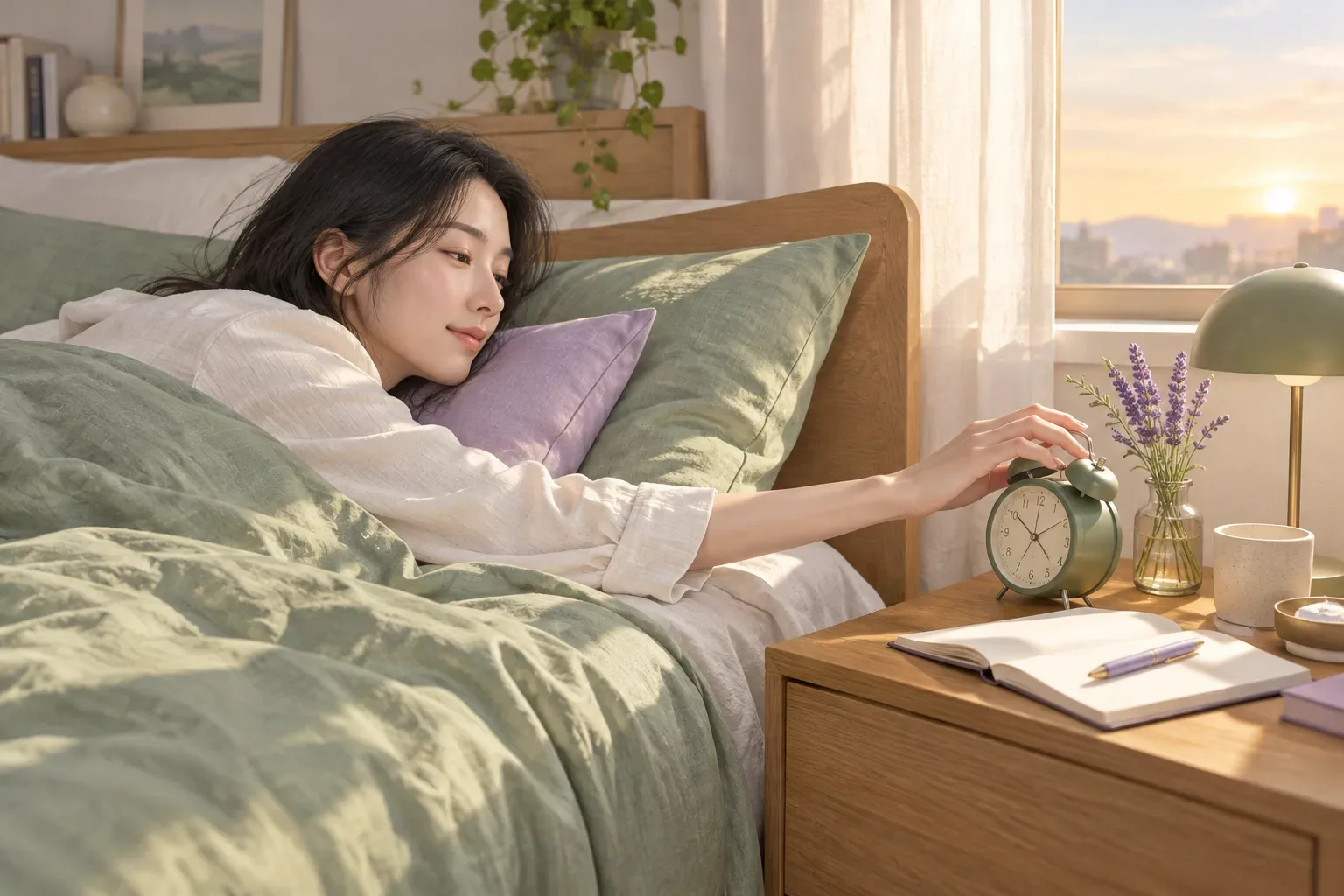
The takeaway: Morning light is not a ‘sleeping pill that puts you to sleep tonight.’ It is a time cue that nudges the body’s clock earlier. To see an effect, combine light soon after waking with a consistent wake time and a dark environment at night.
The circadian rhythm is the body’s timekeeping system, operating on an approximately 24-hour cycle to regulate sleep and wakefulness, hormones, and body temperature. The National Institute of General Medical Sciences explains that light entering through the eyes is transmitted to the brain’s suprachiasmatic nucleus, which regulates when melatonin is produced.[1]
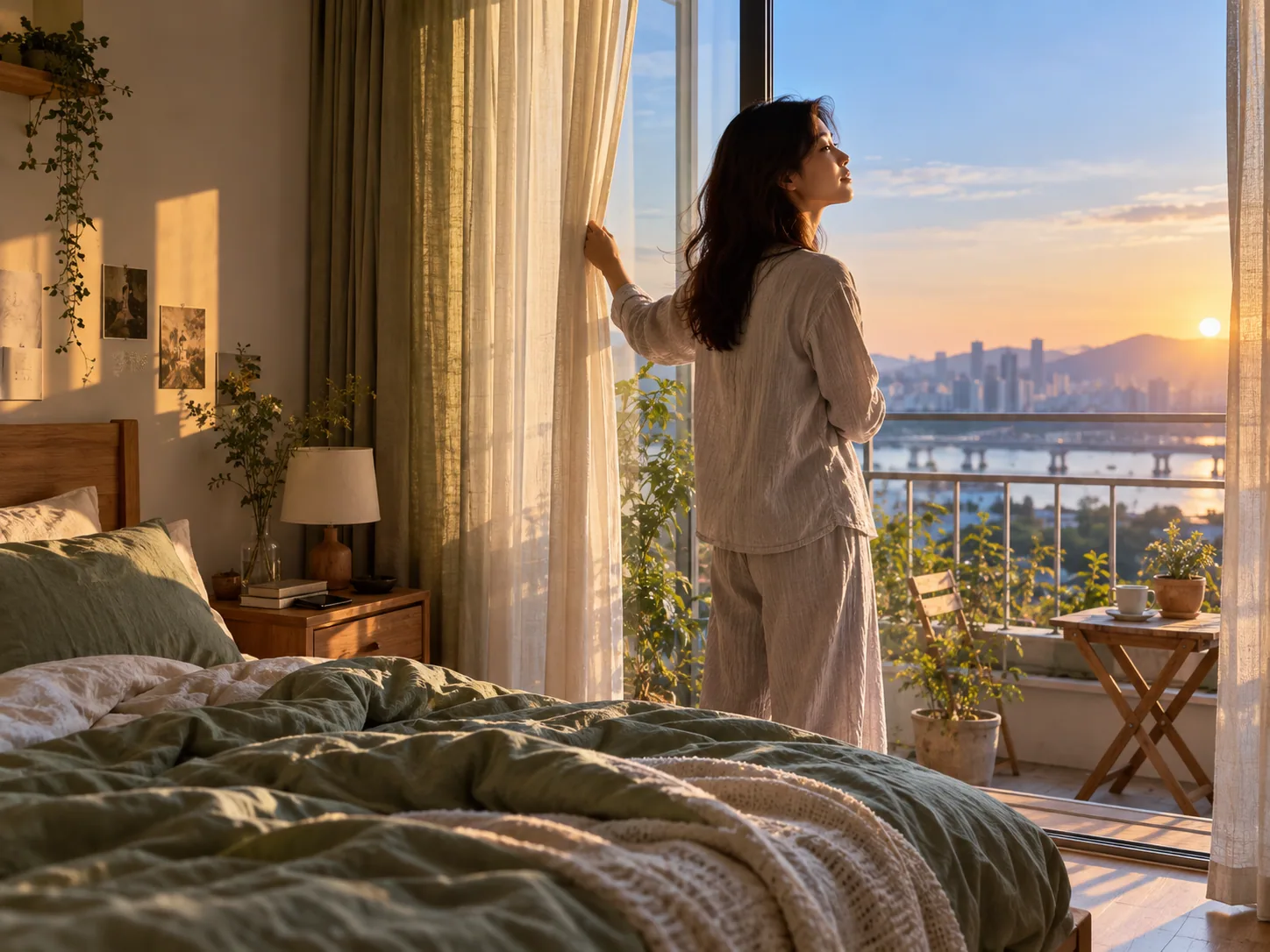
Why can morning light move bedtime earlier?
In general, bright light around the time of waking serves as a signal that shifts the biological clock earlier. Materials from CDC’s NIOSH explain that light during the morning’s sensitive time window can advance the rhythm, while evening light can delay it.[2] The same light can have opposite effects depending on when it is viewed.
For this reason, morning light may help people who go to bed and wake up late. Night-shift workers and people on very early shifts, however, may need to shift their rhythms in a different direction, so general advice about ‘morning sunlight’ should not be applied to them without consideration.
What did the 2026 meta-analysis show?
A systematic review and meta-analysis published in 2026 gathered randomized trials of morning blue-light therapy in adults with insomnia, whether primary or occurring alongside other conditions, and assessed sleep and daytime symptoms.[3] The search covered studies through April 16, 2025, synthesizing clinical trials that used specific devices, wavelengths, and exposure times.
These findings should not be reframed as ‘insomnia can be treated if everyone spends a few minutes in sunlight by a window.’ Outdoor natural light and medical light boxes differ in brightness, wavelength, and exposure time, while the causes of insomnia vary, including stress, pain, sleep apnea, depression, and shift work.
How many minutes are needed?
There is no single number of minutes that works for everyone. CDC materials explain that, in addition to light intensity, the duration of exposure during a sensitive time window affects shifts in the circadian rhythm.[4] Brightness can vary greatly between clear and cloudy days, as well as between a spot by an indoor window and the outdoors.
Start with a habit rather than competing over numbers. Open the curtains as soon as possible after waking, and if weather and safety permit, spend part of your morning walk or commute outdoors. Wake at the same time every day, and reduce strong lighting and bright screens in the evening.
Are sunlight and a light box the same?
Natural light costs nothing and can be obtained alongside daytime activities. A light box provides consistent brightness and may be used to treat circadian rhythm disorders, but the timing and distance of use vary according to the treatment goal. The National Heart, Lung, and Blood Institute notes that a morning light box can be used to move sleep and wake times earlier.[5]
People with eye conditions, those taking medications that increase sensitivity to light, and people with bipolar disorder who are at risk of mania should not start using a light box on their own. Outdoors, do not look directly at the sun, and follow standard sun-protection practices.
Four steps to start today
1) Keep your wake time consistent within a 30–60-minute range, including on weekends. 2) Turn on indoor lights as soon as you get up and, if possible, get outdoor light. 3) Make sure you get enough activity during the day. 4) Lower the brightness of lights and screens 1–2 hours before bed. Track changes over 1–2 weeks rather than just a few days.
Frequently asked questions
Is it okay to get sunlight through a closed window?
You can still receive a light signal, but outdoors is generally much brighter than indoors. When conditions allow, outdoor activity without looking directly at the sun provides more reliable light exposure.
If I get morning light, can I use my smartphone at night?
No. Strong light late in the evening can push the circadian clock later. Morning light and nighttime darkness need to be managed as a pair.[2]
When should I see a doctor?
Consider a sleep-medicine evaluation if you have difficulty falling asleep or wake frequently at least three times a week for three months or longer, and your daytime functioning is affected. Seek care sooner if you have severe snoring or apnea, worsening depression, or dangerous drowsy driving.
DERME VERDICT
Morning light is a lifestyle cue worth trying before expensive supplements, but it is not a cure-all. Combine it with a consistent wake time and evening light management, and use a light box under professional guidance tailored to your health status and target schedule.
Sources
[2] U.S. CDC/NIOSH · Effects of Light on Circadian Rhythms · Date of publication not specified
[4] U.S. CDC/NIOSH · Using Light to Promote a Better Day Shift · Date of publication not specified
- Source
- [1] 미국 국립일반의학연구소(NIGMS)·Circadian Rhythms·발표일 미표기
- [2] 미국 CDC/NIOSH·Effects of Light on Circadian Rhythms·발표일 미표기
- [3] PubMed·Effectiveness of morning blue light therapy on sleep: systematic review and meta-analysis·2026-05-25
- [4] 미국 CDC/NIOSH·Using Light to Promote a Better Day Shift·발표일 미표기
- [5] 미국 국립심장폐혈액연구소(NHLBI)·Circadian Rhythm Disorders: Treatment·발표일 미표기