To put it simply, a glass of water in the morning can be a positive lifestyle cue, but it cannot by itself restore a skin barrier disrupted by sleep deprivation. A reasonable order of priorities is to first recover lost sleep and establish a consistent routine of gentle cleansing, moisturization, and sun protection, then consider a treatment only if dryness persists.[2][3]
The key point: After an all-nighter, the first-line approach to dullness is not “drinking lots of water,” but regular sleep and barrier care. Injectable treatments come next.
What is Jung Ho-yeon’s morning routine?
In an interview published by Vogue Korea on July 24, 2026, Jung Ho-yeon said that she gets up and drinks lukewarm water. She also explained that, since entering her thirties, she has been mindful of her hormones and daily rhythm and tries to maintain a morning routine, while noting that her sleep becomes irregular when she begins working on a project.[1] This does not indicate any particular treatment history or skin condition.
The key takeaway from this episode is not to exaggerate the cosmetic effects of water itself, but to use a repeatable morning action to restore a disrupted rhythm. A glass of water is an ordinary habit that replenishes some of the fluid lost overnight, but restoring the skin barrier also requires sleep and topical moisturization.
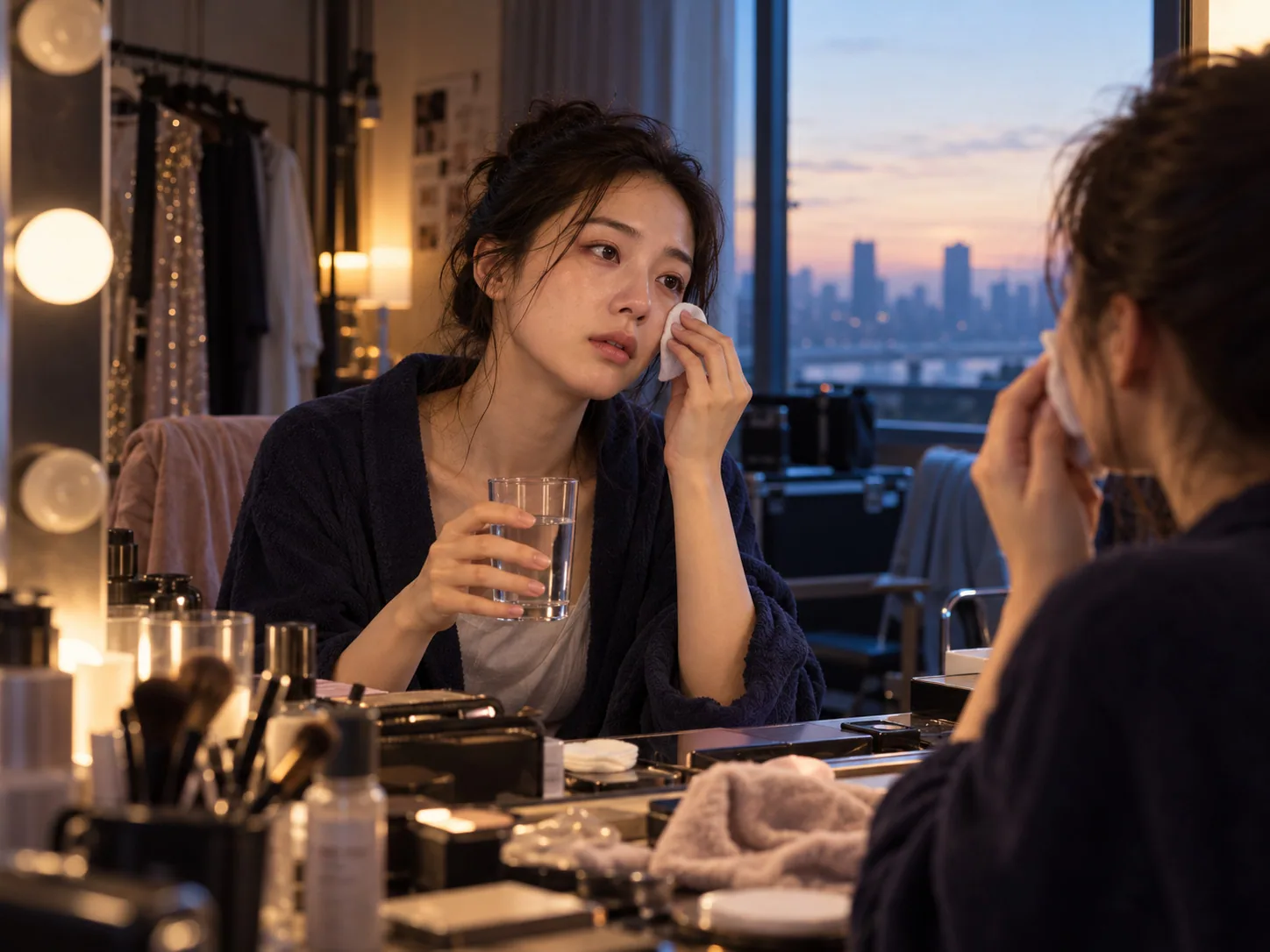
What happens to the skin when you cut back on sleep?
A 2019 experiment involving 32 Korean women in their forties reported that skin hydration decreased from the first day among participants who slept only four hours for six days, while measures of radiance, elasticity, and wrinkles worsened over time.[2] The sample was small, and the participants’ age range and study period were limited, so the same degree of change cannot be assumed for everyone.
A 2015 study of 60 white women found that the group sleeping five hours or less per day had higher transepidermal water loss (TEWL) and slower skin-barrier recovery than the group sleeping seven to nine hours.[3] TEWL refers to the amount of water lost through the skin and is an indicator of how well the barrier retains moisture. Because this was an observational study, sleep cannot be identified as the sole cause.
A 2018 experiment involving extremely severe sleep restriction also observed delayed skin-barrier recovery.[4] However, because the unusual condition allowed only two hours of sleep per day, its findings should not be directly extrapolated to a typical single late night at work. The common direction of the evidence is that repeated short and irregular sleep may be unfavorable to skin recovery.
A lifestyle sequence to help skin recover the day after an all-nighter
1. Schedule a sleep window before reaching for a glass of water
Drink lukewarm water after waking, but first set aside roughly seven or more hours for sleep that night. Creating similar bedtimes and wake times over several days is more favorable for restoring your rhythm than catching up on sleep over the weekend.
2. Keep cleansing to a minimum and moisturization simple
Take a day or two off from hot water, scrubs, high-concentration acids, and retinoids, and use lukewarm water and a gentle cleanser instead. Immediately after cleansing, apply a fragrance-free moisturizer containing ceramides, glycerin, and hyaluronic acid. If your skin stings or turns red, do not layer multiple functional products.
3. Restore your morning sun-protection routine
The more tired you are from lack of sleep, the easier it is to skip your routine. Apply a generous amount of broad-spectrum sunscreen 15 minutes before going outside, and reapply if you will be outdoors for an extended period. When your skin is sensitive, choose a product with minimal fragrance and irritation potential.
When should you consider glow injections or an HA skin booster?
If residual dryness and makeup that fails to sit smoothly remain after one to two weeks of relatively regular sleep and moisturization, and there is no inflammatory skin disease, an injectable treatment with non-crosslinked hyaluronic acid (HA) may be discussed as an adjunctive option. HA is a water-attracting ingredient, and injectable treatments deliver small amounts at multiple points in the skin.
A 2025 systematic review examined 12 studies of injectable HA and found potential improvements in hydration and radiance, but changes in elasticity and melanin were not significant, and the number and design of the studies had limitations.[5] A 2026 randomized trial involving 448 adults also reported improved hydration with a specific non-crosslinked HA product, but the results of a single product and protocol cannot be applied to all glow injections.[6]
Seolreim Clinic currently presents a Super Miracle Glow program combining PDRN, HA, and vitamins on its official website.[7] This page serves as information confirming the program’s availability and composition; it is not independent evidence of the overall program’s efficacy or safety. Bruising, swelling, pain, and temporary bumps may occur after injections, and, rarely, infection or vascular complications can develop, so the product, dosage, and recovery schedule should be confirmed before treatment.
Frequently asked questions
Will drinking a lot of water immediately increase skin hydration?
If you are dehydrated, replacing fluids is necessary, but drinking excessive amounts of water will not immediately repair skin-barrier damage. Use thirst and urine color as guides for your usual fluid intake, and manage sleep and topical moisturization together.
Will getting a glow injection immediately after an all-nighter speed recovery?
It is not recommended. On days when you are fatigued and your schedule is unstable, managing bruising and swelling and preventing infection may be more difficult. First restore your sleep and barrier-care routine for several days, then assess whether treatment is indicated if symptoms persist.
Dr. Kang Jeong-ha’s recommendation
First, for seven days, keep your bedtime and wake time within a one-hour range, using a morning glass of water as the cue that starts your routine. Second, during that period, stick to just three things: gentle cleansing, a ceramide moisturizer, and morning sunscreen. Third, if dryness and makeup settling poorly remain without inflammation after one to two weeks, consider an HA-based glow injection or skin booster as the first treatment option. The reason is that the current evidence is concentrated mainly on improvements in “hydration and radiance.”[5][6]
The expected scope of treatment is temporary improvement in hydration and radiance; it does not treat sleep deprivation. Allow time between the treatment and important events to account for bruising, swelling, pain, and temporary bumps. If there are signs of dermatitis, such as stinging, oozing, or severe erythema, diagnosis and barrier treatment should come before injectable treatment.
Sources
[1] Vogue Korea · ICON, Jung Ho-yeon · 2026-07-24
[2] PubMed · Effects of sleep deprivation on facial skin characteristics in Korean women · 2019
[3] PubMed · Does poor sleep quality affect skin ageing? · 2015
[4] PubMed · Sleep restriction and skin barrier recovery · 2018
[5] PubMed · Injectable hyaluronic acid and skin quality: systematic review · 2025
[6] PubMed · Non-crosslinked hyaluronic acid injections for skin quality: randomized trial · 2026
[7] Seolreim Clinic · Official information on Super Miracle Glow Injection · Accessed 2026-10-13

Interesting skincare stories for healthy skin
Drawing on 16 years of experience running Seolreim Clinic in Gangnam, we present easy, approachable stories about dermatology treatments, along with practical skincare methods for everyday life and engaging topics involving entertainers, celebrities, and television. Through professional knowledge and experience, we aim to help your skin look healthier and more beautiful. We hope this series broadens your understanding of skin and helps you discover ways to care for yourself.
Medical Director Kang Jeong-ha (Seolreim Clinic Gangnam)
- Source
- [1]보그 코리아·아이콘, 정호연·2026-07-24
- [2]PubMed·Effects of sleep deprivation on facial skin characteristics in Korean women·2019
- [3]PubMed·Does poor sleep quality affect skin ageing?·2015
- [4]PubMed·Sleep restriction and skin barrier recovery·2018
- [5]PubMed·Injectable hyaluronic acid and skin quality: systematic review·2025
- [6]PubMed·Non-crosslinked hyaluronic acid injections for skin quality: randomized trial·2026
- [7]설레임의원·슈퍼미라클 물광주사 공식 안내·확인 2026-10-13